The Best Basil Dressing Recipe for Salads & Bowls
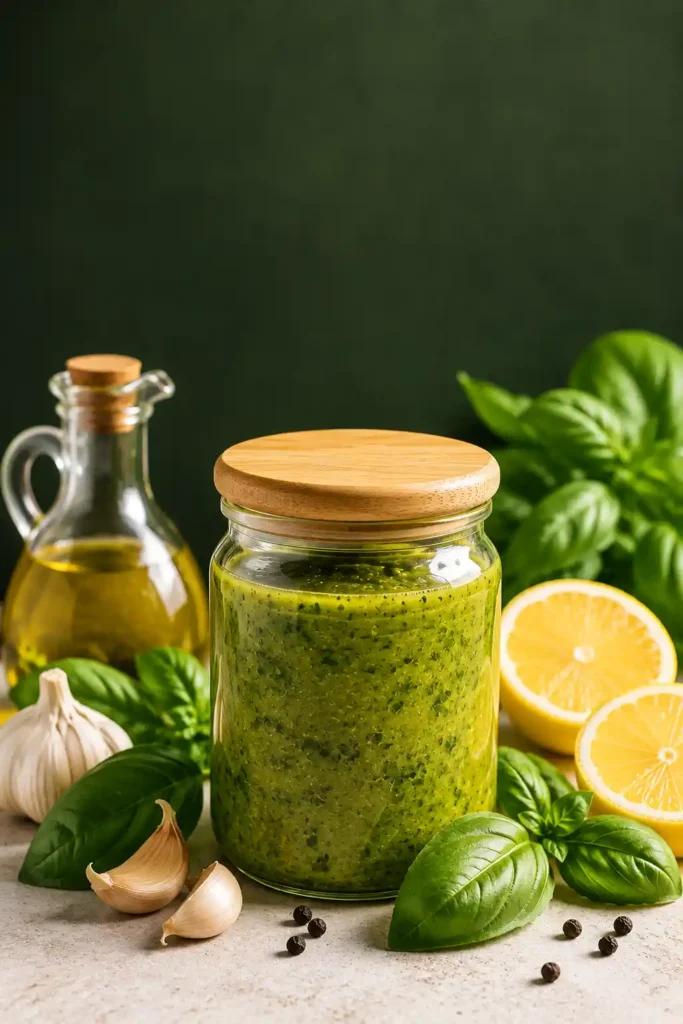
If you have been putting bottled dressing on your salads, this recipe is about to change everything. This basil dressing is fresh, glossy, vibrant green, and takes exactly five minutes to make in a blender. It is the kind of fresh herb dressing that makes a simple bowl of greens taste like something special, and once you try it on a grain bowl or drizzled over grilled chicken, you will never go back to the store-bought version.
I make a batch every few days and keep it in a glass jar in the fridge. My kids put it on everything. My husband asks me to drizzle it on his roasted vegetables. It is genuinely the most-used thing in our kitchen all summer long.
Recipe Highlights
| Detail | Info |
| Prep Time | 5 minutes |
| Cook Time | None |
| Total Time | 5 minutes |
| Calories | ~95 kcal per serving |
| Servings | 8–10 |
| Yield | ¾ cup |
| Difficulty | Beginner |
| Cuisine | Mediterranean / Italian-American |
| Dietary | Vegan, Gluten-Free, Dairy-Free |
Why This Basil Dressing Recipe Works
- Ready in 5 minutes with one blender. No cooking, no reducing, no fussing. Add everything, blend, done.
- Stays thick and glossy, not watery. Adding the olive oil in a slow, steady stream while blending creates a proper emulsion that holds together beautifully.
- Works on salads AND bowls. Most dressings are too thin for grain bowls or too thick for delicate greens. This one hits the perfect middle ground for both.
- Flexible with what you have. No red wine vinegar? Use lemon juice. No shallot? A small slice of red onion works perfectly. This recipe forgives substitutions easily.
- Tastes better the next day. The garlic mellows and the basil deepens overnight. Make a batch Sunday night and use it all week.
Ingredients & Substitutions
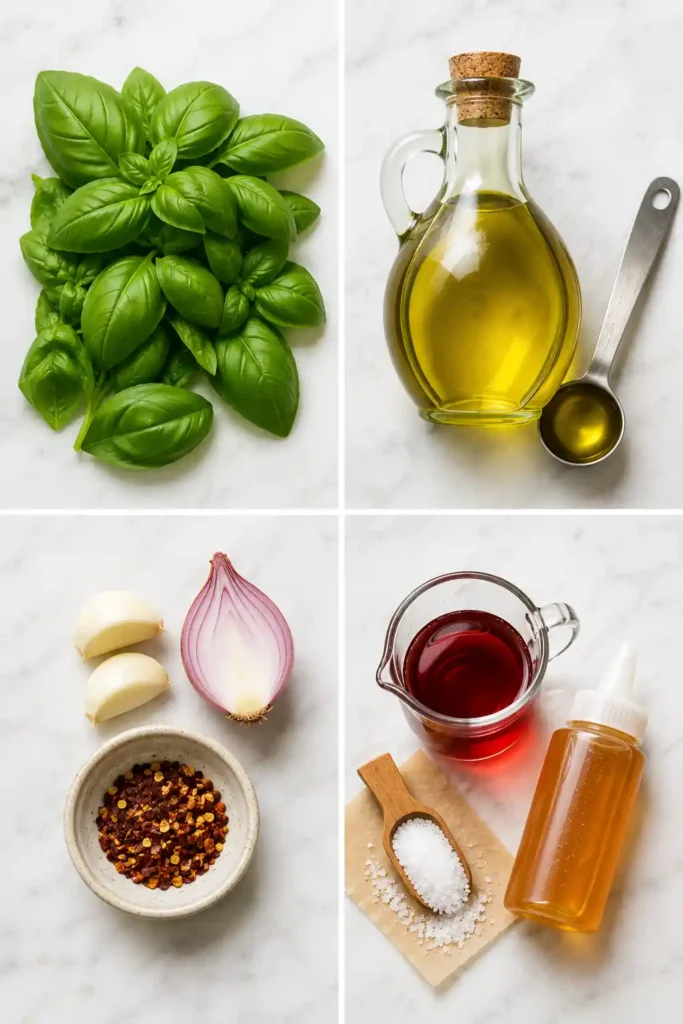
Fresh Basil (2 cups, tightly packed): Use bright green leaves with no dark spots. Wilted or blackened basil makes the dressing taste bitter and turns it an unappetizing murky color. If you want an extra-vivid green, blanch the leaves in boiling water for 5 seconds, then immediately transfer to an ice bath before blending.
Extra Virgin Olive Oil (½ cup): Since this is a no-cook basil dressing, you taste every drop of the oil. Use the best quality extra virgin olive oil you have. A fruity, peppery EVOO makes the biggest difference in flavor.
Red Wine Vinegar (2 tablespoons): This is your acid and it balances the richness of the oil perfectly. Substitutes: fresh lemon juice (brighter and more citrusy), champagne vinegar (lighter and more delicate), or apple cider vinegar (slightly fruity).
Garlic (2 cloves): Raw garlic gives a sharp, punchy note. For a gentler, sweeter flavor use 3 cloves of roasted garlic instead.
Shallot (1 small, roughly chopped): Adds quiet onion depth without overpowering the basil. A thin slice of red onion is a perfect substitute.
Red Pepper Flakes (¼ teaspoon, optional): Adds a gentle background warmth without actual heat. Leave it out for a completely mild basil dressing.
Kosher Salt (1 teaspoon): Salt wakes up the basil and rounds out every other flavor. Season generously and always taste at the end.
Secret Additions (what most recipes skip): Add 1 teaspoon of honey to round out the acidity, especially if your vinegar is sharp or your basil is slightly bitter. For a richer, pesto-adjacent depth, stir in 1 tablespoon of finely grated Parmesan after blending. Both of these small additions take this basil dressing from very good to genuinely great.
How to Make Basil Dressing – Step by Step
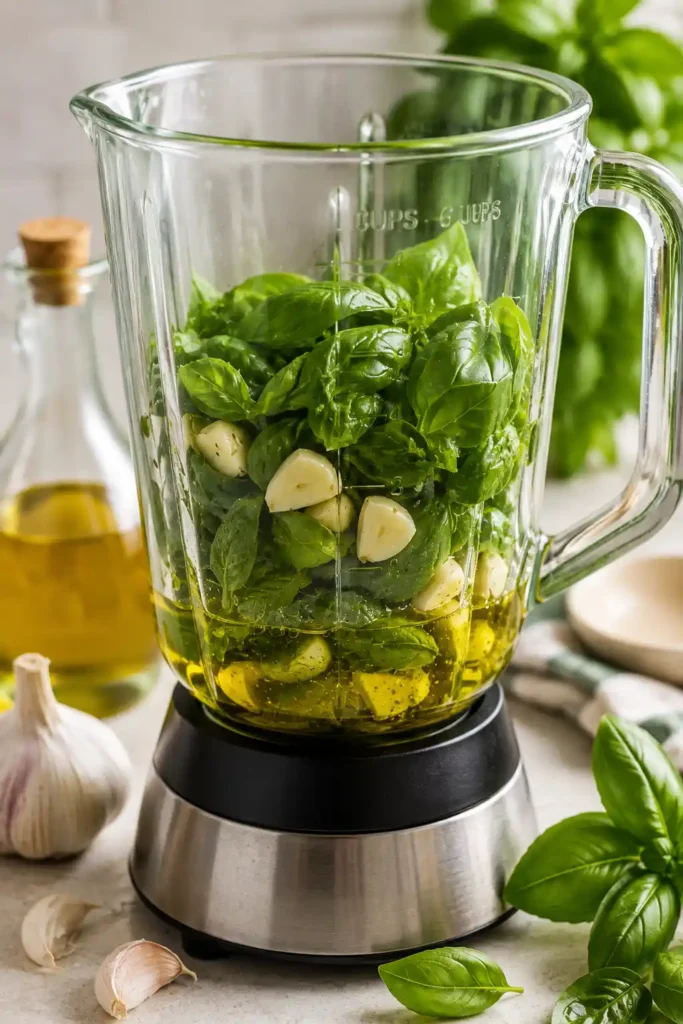
Step 1: Add the shallot, garlic, red pepper flakes, and salt to the blender first. Pulse 3 to 4 times to break them down before the basil goes in. This prevents large chunks from getting stuck under the basil leaves.
Step 2: Add the tightly packed fresh basil leaves directly on top of the aromatics. This layering helps the blender catch everything evenly from the start.
Step 3: Pour in the red wine vinegar, place the lid on firmly, and blend on medium speed for about 15 seconds until the basil is roughly broken down and the mixture looks dark green.
Step 4: With the blender still running on low speed, slowly pour the olive oil in through the lid opening in a thin, steady stream. This is the most important step. Pouring slowly while blending creates a smooth emulsification instead of a separated, oily mess.
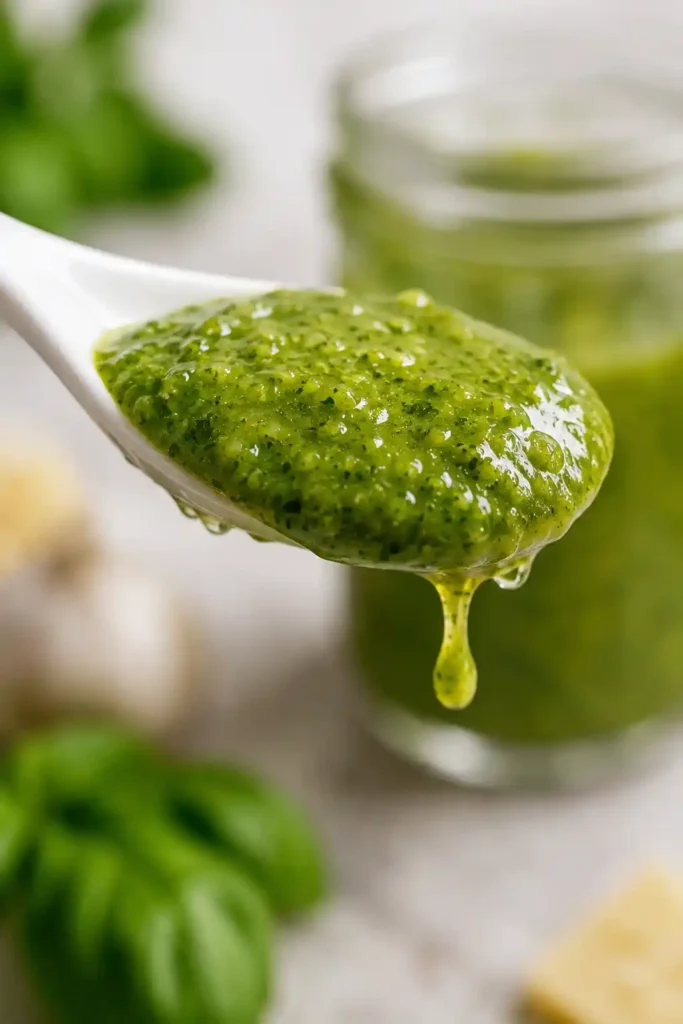
Step 5: Once all the oil is in, increase to medium-high and blend for a full 45 to 60 seconds. The dressing should turn from dark, chunky green to a vivid, smooth, glossy basil dressing that coats the back of a spoon.
Step 6: Taste carefully. Add a pinch more salt if it tastes flat, a few more drops of vinegar if it needs brightness, or a small drizzle of honey if it is too sharp. Blend for 10 more seconds and serve.
Visual cue: The finished basil dressing should look like liquid emerald. Vivid, glossy, smooth, and thick enough to coat a spoon without running off immediately. If it looks watery or separated, blend on high for 20 more seconds.
Consistency & Troubleshooting Guide
Dressing is thin and watery: The oil was added too quickly. Pour the dressing back into the blender, turn it on low, and slowly drizzle in 1 to 2 more tablespoons of olive oil. Blend on high for 30 seconds to re-emulsify.
Color turned dark brown or muddy: The basil was already oxidized or past its prime. Always use very fresh basil with no dark spots. Blanching briefly before blending locks in the bright green color. Next time, also press plastic wrap directly onto the surface of the finished dressing before sealing the jar — this slows oxidation significantly.
Tastes too sharp or acidic: Add ½ teaspoon of honey or a pinch of sugar, blend for 10 seconds, and taste again. A small drizzle of extra olive oil also mellows acidity.
Too thick after refrigerating: Completely normal. Cold temperatures cause olive oil to solidify. Let the jar sit at room temperature for 10 to 15 minutes, then shake well. If still too thick, add 1 teaspoon of warm water and shake again, or blend briefly.
Tastes bitter: Usually means the basil had dark spots, or slightly too much garlic was added. Add a small drizzle of honey and a tablespoon of fresh basil, then blend again.
How to Use Basil Dressing – Pairings & Serving Guide
Classic Salad & Bowl Pairings
1. Simple Arugula or Mixed Green Salad: This is where a good basil salad dressing truly shines. Toss with arugula, cherry tomatoes, shaved Parmesan, and cucumber just before serving. Dress at the very last moment to keep the greens crisp and bright. Two tablespoons per person is the right amount. Pair this with the Lemon Garlic Vinaigrette Recipe for a dressing duo that covers every salad situation.
2. Mediterranean Grain Bowls: Drizzle 3 tablespoons of basil dressing over a bowl of warm farro or quinoa with roasted zucchini, chickpeas, and olives. The warmth of the grains softens the garlic and melds the basil flavor in beautifully. Try it with the Salmon Mediterranean Bowl with Farro for a complete meal that comes together fast.
3. Caprese Salad: Drizzle generously over thick slices of fresh mozzarella, ripe tomatoes, and whole basil leaves. Serve at room temperature with flaked sea salt and cracked black pepper. No other dressing needed.
4. Pasta Salad: Toss ¼ cup of basil dressing with freshly drained warm pasta, halved cherry tomatoes, and shaved Parmesan. The heat of the pasta gently opens up the garlic and basil. Perfect for a quick weeknight dinner or next-day lunch. The Crispy Pasta Salad Recipe is incredible with this dressing.
5. Roasted Vegetable Bowl: Toss still-warm roasted asparagus, zucchini, or bell peppers in 2 tablespoons of basil dressing right out of the oven. The heat helps the dressing absorb into the vegetables for maximum flavor.
Creative & Unexpected Uses
Grilled Chicken or Shrimp Marinade: Pour ½ cup of basil dressing over chicken thighs or shrimp and marinate for 30 minutes before grilling. The olive oil coats the protein, the garlic infuses deep flavor, and the herbs create a slightly charred, fragrant crust on the grill. Serve alongside a Crunchy Detox Salad for a complete healthy dinner.
Sandwich Spread: Spread directly onto toasted sourdough or a ciabatta roll instead of mayonnaise. Use in caprese sandwiches, veggie wraps, or grilled chicken paninis. Two tablespoons per sandwich is all you need.
Dipping Sauce for Bread and Vegetables: Pour into a small ceramic bowl, add an extra drizzle of olive oil on top, and serve with focaccia, baguette slices, or fresh crudites. This is one of the easiest appetizers for entertaining and it always gets requests for the recipe.
Serving Instructions
Always serve basil dressing cold or at room temperature. Never heat it directly on the stove — the fresh basil flavor breaks down quickly under direct heat. For warm dishes like pasta or roasted vegetables, drizzle the dressing on right before serving rather than cooking it into the dish. For salads and bowls, toss or drizzle at the very last moment before eating.
Garnishing for a Restaurant Look
- Lay 3 to 4 whole fresh basil leaves over the finished salad or bowl
- Crack fresh black pepper generously over the top
- Add a light sprinkle of flaked sea salt for texture
- Drizzle a thin ribbon of your best olive oil over the basil dressing once plated
- Finish grain bowls with toasted pine nuts or a shaving of Parmesan for a polished, restaurant-quality presentation
Storage, Shelf Life & Remixing
Refrigerator: Transfer the finished basil dressing to a clean glass mason jar with a tight-fitting lid. Press a small piece of plastic wrap directly onto the surface of the dressing before sealing — this slows oxidation and keeps the color bright green for longer. Store for up to 7 days.
Freezer: This basil dressing freezes beautifully, which is especially useful in summer when fresh basil is abundant. Pour into an ice cube tray, freeze solid, then transfer cubes to a sealed zip-lock bag. Each cube is roughly 1 to 2 servings. Thaw overnight in the fridge or at room temperature for 20 to 30 minutes.
After refrigerating: The olive oil will solidify and the dressing will look chunky or separated. This is completely normal. Set the jar on the counter for 10 minutes and shake hard. If still thick, add 1 teaspoon of warm water and shake again, or blend briefly for 15 seconds.
Frequently Asked Questions
Q: Can I make basil dressing without a blender?
Yes. Use a food processor and process for 60 to 90 seconds. For a rustic hand-made version, finely mince the basil and garlic by hand and whisk everything together in a bowl. The texture will be chunkier but the flavor is equally delicious.
Q: Why did my basil dressing turn brown?
Basil oxidizes quickly once it is cut or blended and exposed to air. Use very fresh basil with no dark spots, blanch briefly before blending, and press plastic wrap directly onto the dressing surface before sealing the jar. All three steps together keep it green for much longer.
Q: Can I freeze homemade basil dressing?
Absolutely. Freeze in ice cube trays for easy single-use portions. Thaw in the fridge overnight or at room temperature for 20 minutes. Texture and flavor hold up very well for up to 3 months.
Q: How do I thin the dressing after it thickens in the fridge?
Let the jar come to room temperature for 10 to 15 minutes, then shake. If still thick, add 1 teaspoon of warm water or a small splash of vinegar and shake again. A 15-second blend also works perfectly.
Q: Is basil dressing the same as pesto?
They are related but different. Pesto contains Parmesan and pine nuts and is thick like a paste. Basil dressing is thinner, pourable, and vinegar-based — made for salads, bowls, and drizzling rather than tossing with pasta.
Q: Can I use dried basil instead of fresh?
Fresh basil is strongly recommended. Dried basil is too earthy and loses the bright, clean flavor that makes this dressing so good. If fresh basil is not available, a blend of fresh parsley and a small amount of dried basil is the best workaround.
Q: How long does homemade basil dressing last?
Up to 7 days in the refrigerator in a sealed glass jar. The flavor is actually best on days 2 and 3 once the garlic has mellowed and the basil has fully infused the oil.

Basil Dressing Recipe for Salads and Bowls
Course: Dressing, CondimentCuisine: Mediterranean, Italian-AmericanDifficulty: Easy8
servings5
minutes00
minutes95
kcal5
minutesThis basil dressing is fresh, bright, and ready in just 5 minutes. Made with simple ingredients like fresh basil, garlic, olive oil, and red wine vinegar, it blends into a smooth, glossy green dressing that works on everything. Toss it with salads, drizzle it over grain bowls, or use it as a marinade for grilled chicken. Once you make this at home, you will never reach for a bottle again.
Ingredients
2 cups fresh basil leaves, tightly packed (stems removed)
½ cup extra virgin olive oil
2 tablespoons red wine vinegar
2 cloves garlic
1 small shallot, roughly chopped
¼ teaspoon red pepper flakes (optional)
1 teaspoon kosher salt, plus more to taste
1 teaspoon honey (optional, for balance)
1 tablespoon finely grated Parmesan (optional, for depth)
Directions
- Add shallot, garlic, red pepper flakes, and salt to the blender. Pulse 3–4 times to break down.
- Add fresh basil leaves on top of the aromatics.
- Pour in red wine vinegar and blend on medium for 15 seconds.
- With the blender running on low, slowly drizzle in olive oil through the lid opening in a thin, steady stream.
- Increase to medium-high and blend for 45–60 seconds until smooth and glossy.
- Taste and adjust salt, vinegar, or add honey if needed. Blend 10 more seconds.
- Serve immediately or store in a sealed glass jar in the refrigerator for up to 7 days.
Notes & Substitutions
- Vinegar swap: Lemon juice (brighter), champagne vinegar (milder), or apple cider vinegar (fruity).
Oil swap: Avocado oil or grapeseed oil for a neutral flavor.
Color tip: Blanch basil leaves 5 seconds in boiling water, ice bath, then blend for vivid green.
Freezer: Ice cube trays, up to 3 months.
Storage tip: Press plastic wrap onto dressing surface before sealing jar to slow oxidation. - Calories: ~95 kcal | Fat: 10.5g | Saturated Fat: 1.5g | Carbohydrates: 1g | Sugar: 0.3g | Protein: 0.2g | Sodium: 240mg
Warm Conclusion
This basil dressing has been in my regular rotation for years and I cannot imagine summer without it. It is the kind of recipe that gives you a real, immediate win in the kitchen with almost zero effort. Make a big batch, keep it in a jar in the fridge, and watch how it transforms your weekday salads and bowls from boring to genuinely exciting. If you are building out your homemade dressing collection, check out the 20 Healthy Salad Dressing Recipes roundup and the Chimichurri Sauce Recipe for another herby, blender-fresh sauce you will use just as often.