Lemon Caper Sauce Recipe (Ready in 10 Minutes!)
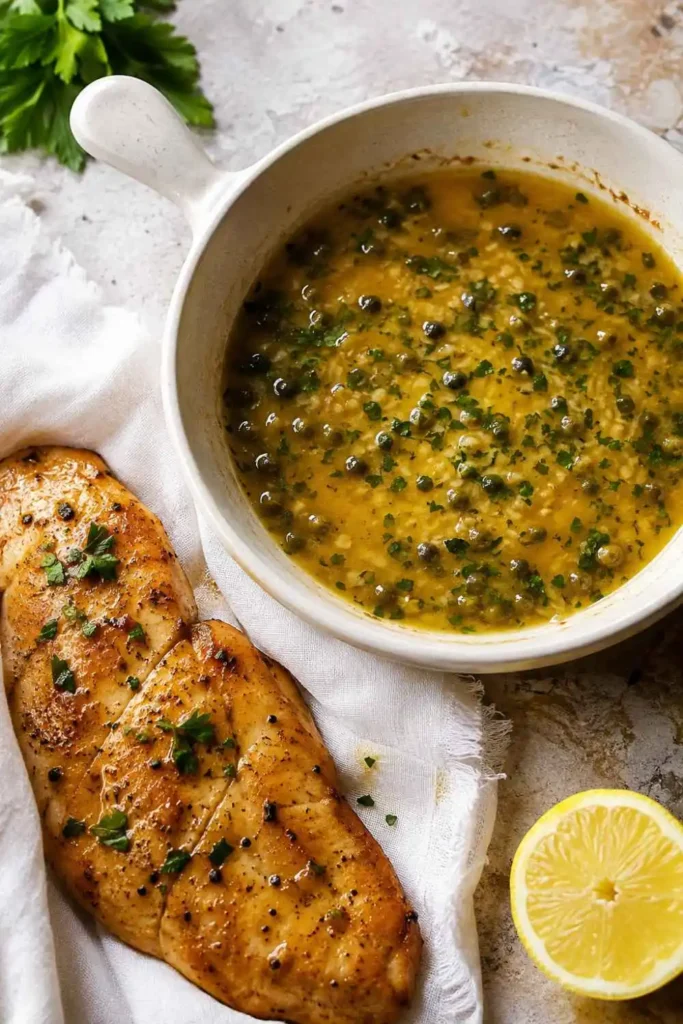
There are sauces you make once in a while, and then there are sauces you keep permanently in rotation. This lemon caper sauce recipe is the second kind.
Six ingredients. One pan. Ten minutes. And the result? A glossy, tangy, salty, buttery sauce that makes a basic chicken breast taste like something from a proper Italian restaurant. My husband now asks for it on literally everything — fish, pasta, roasted potatoes, and yes, I once caught him dipping bread straight into the pan.
This is the classic piccata sauce, which started life in Italy as the sauce for thinly pounded veal cutlets. It traveled to America, got applied to chicken, and then kept spreading because people just could not stop. I tested this recipe four times to nail the exact butter-to-lemon ratio that stays glossy without breaking or going greasy. Here is that version.
Recipe Highlights Box
| Prep Time | 5 minutes |
| Cook Time | 5 minutes |
| Total Time | 10 minutes |
| Calories | ~140 kcal per serving |
| Yield | 6 servings (about ¾ cup total) |
| Difficulty | Super Easy |
| Cuisine | Italian-Mediterranean |
Why This Recipe Works
- The ratio is dialed in. Too much lemon and the sauce turns sharp and thin. Too much butter and it goes greasy and heavy. This formula — ½ cup butter to 2 tablespoons fresh lemon juice — gives you a sauce that is bright without being sour and rich without being cloying.
- Capers do the heavy lifting. They bring salt, brine, and a mild tang that replaces the need for any vinegar or extra seasoning. Drain them well so they do not water the sauce down.
- Low heat is the real secret. High heat will break this sauce fast. You are melting and infusing, not sauteing and browning. Keep the flame low the entire time.
- It emulsifies beautifully with an immersion blender if you want that creamy, opaque, restaurant-style version (more on that below).
- Uses pantry staples you already have. Butter, garlic, lemon, capers, parsley — nothing obscure, no specialty shopping needed.
Ingredients + Smart Substitutions
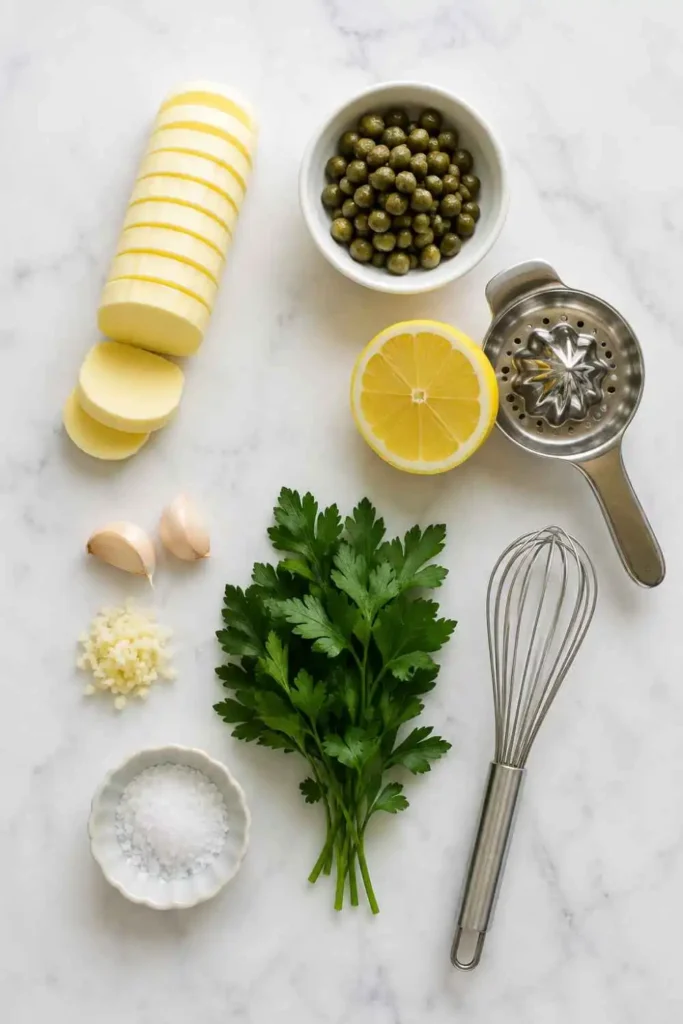
The Core Six:
- ½ cup salted butter — salted butter works perfectly here because capers are already bringing plenty of brine. If you only have unsalted, add a generous pinch of sea salt at the end.
- 2 cloves garlic, finely minced — fine mincing is important. Chunky garlic pieces cook unevenly and can go bitter. Use a microplane or the flat side of your knife.
- 2 tablespoons fresh lemon juice — please use fresh here, not bottled. The difference is enormous in a sauce this simple. About 1 large lemon.
- 4 tablespoons capers, drained — the small nonpareil variety are best. Drain and pat them gently so they do not add excess liquid.
- 2 tablespoons flat-leaf parsley, finely chopped — flat-leaf has better flavor than curly. Add it at the very end so it stays bright green.
- Sea salt to taste — taste before adding any, because capers are already salty.
Substitutions and Variations:
- Vegan version: Swap butter for a good quality extra virgin olive oil. Use about 6 tablespoons since olive oil is lighter in body than butter.
- Lighter version: Use 4 tablespoons butter and 2 tablespoons dry white wine. This cuts the fat by half while still giving you a glossy, flavorful sauce.
- No capers? Finely chopped green olives are the closest substitute. Use 3 tablespoons, finely chopped.
- Herb swaps: Try fresh tarragon or chives instead of parsley for a slightly different flavor profile.
- Add heat: A pinch of crushed red pepper flakes added with the garlic gives a gentle kick that works beautifully with shrimp.
- Add cream: Swirl in 2 tablespoons of heavy cream at the very end for a richer, paler version that clings to pasta perfectly.
- Add Dijon: Half a teaspoon of Dijon mustard whisked in at the end adds depth and helps the sauce hold together even longer.
Step-by-Step Instructions
Classic Pan Sauce Version:
Step 1. Place a small skillet over the lowest flame your stove allows. Add the butter in pieces and let it melt slowly, about 2 minutes. You want melted butter, not browned butter — watch it carefully.
Step 2. Add the minced garlic and stir constantly for 60 seconds. The garlic should turn pale and fragrant but stay completely golden — the moment it starts to color, it is done. Do not walk away.
Step 3. Whisk in the lemon juice and drained capers. The sauce will sizzle briefly. Let it simmer gently for 1 to 2 minutes, stirring occasionally, until it looks slightly glossy and the flavors have melded.
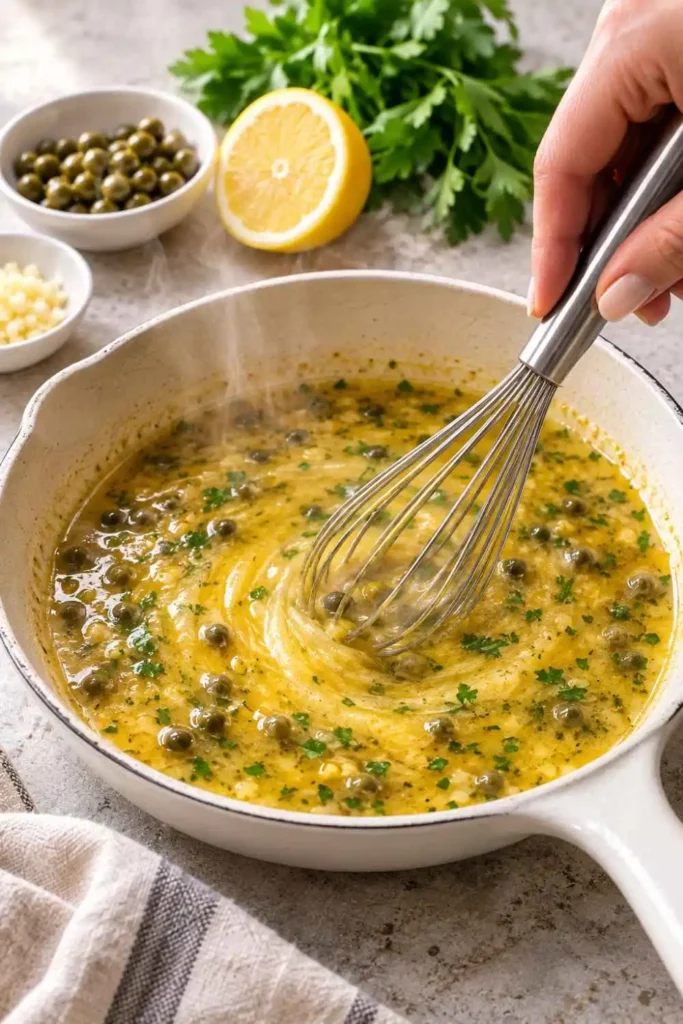
Step 4. Remove from heat. Stir in the parsley. Taste and add sea salt only if needed. Serve immediately over your chosen dish.
Creamy Emulsified Version (Restaurant Style):
Step 1. Follow steps 1 and 2 above — melt butter, cook garlic gently.
Step 2. Transfer the garlic butter into a tall jar or container. Stir in the lemon juice.
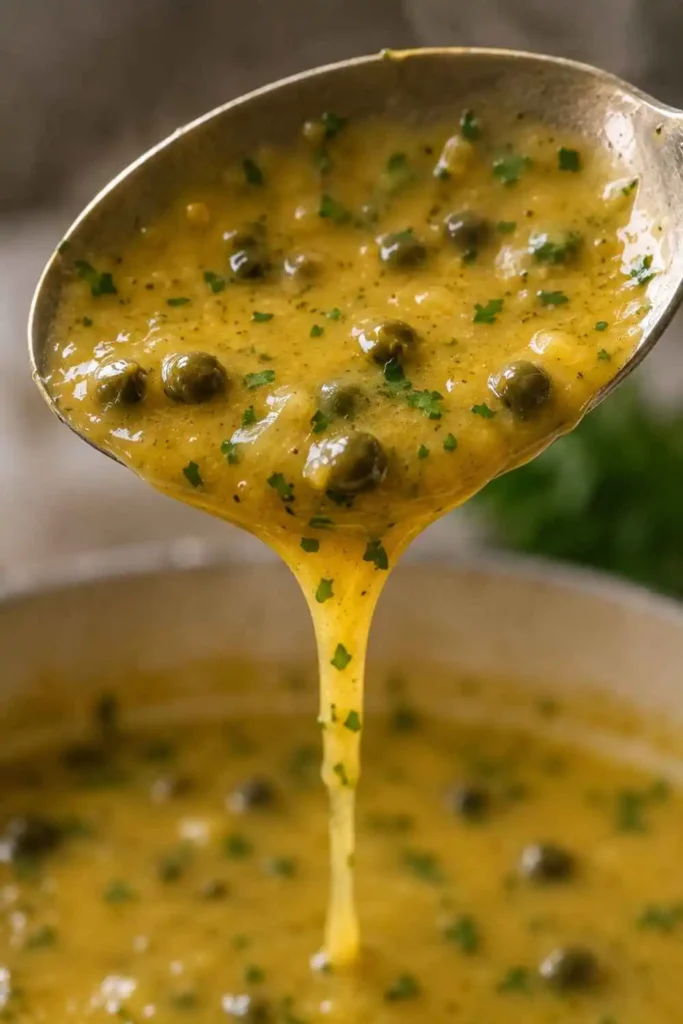
Step 3. Use an immersion blender and blend for 20 to 30 seconds until the mixture turns pale, opaque, and creamy. This is the emulsification step — it creates a thick, velvety texture that looks exactly like a proper restaurant piccata sauce.
Step 4. Stir in capers and parsley by hand. Season with salt. Serve right away or reheat very gently over low heat when ready to use.
Consistency and Troubleshooting Guide
Sauce looks too thin and watery: This usually means the heat was too high and the butter separated. Let the sauce cool for 2 minutes, then whisk in a small cold pat of butter (about 1 teaspoon) over the lowest heat possible. It should pull back together.
Sauce looks greasy and pooling with oil: The emulsion broke, likely from heat that was too high or going too fast. Take the pan off the heat completely. Add 1 tablespoon of cold water and whisk vigorously. This often rescues a broken butter sauce quickly.
Sauce tastes too sharp or sour: You may have used slightly more lemon than needed. Whisk in a small cold pat of butter (½ teaspoon at a time) until the acidity mellows to your taste.
Sauce tastes flat: Add more lemon juice ½ teaspoon at a time, or taste the capers — sometimes a brand can be milder than others. A small pinch of sea salt can also bring the flavors forward fast.
Sauce is too thick after refrigerating: Reheat over very low heat and add 1 to 2 teaspoons of water or chicken broth while stirring. It will loosen right back up.
- Lemon Olive Oil Salad Dressing (Light and Low Calorie)
- Tzatziki Sauce Recipe – Thick, Creamy & Easy
- Chimichurri Sauce Recipe – Bold, Herby & 10 Minutes
How to Use Lemon Caper Sauce: The Complete Pairing Guide
Direct Classic Pairings:
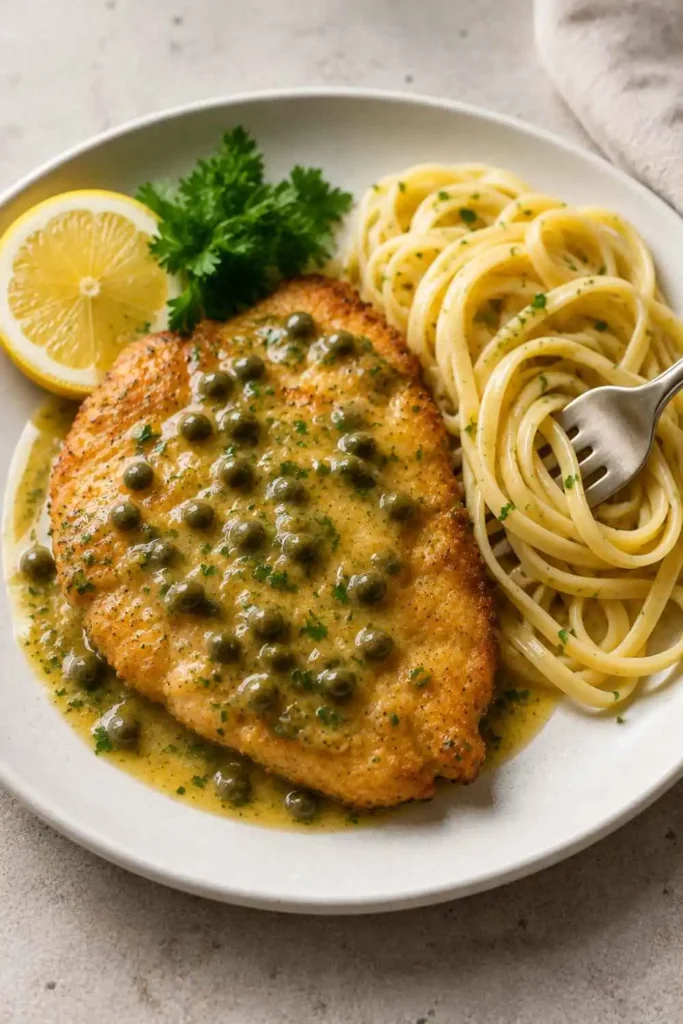
1. Chicken Piccata — the original use and still the best. Pound chicken breasts thin, dredge lightly in flour, sear until golden, then pour this sauce directly over the hot chicken in the pan. Let it simmer together for 1 minute so the flavors soak into the meat.
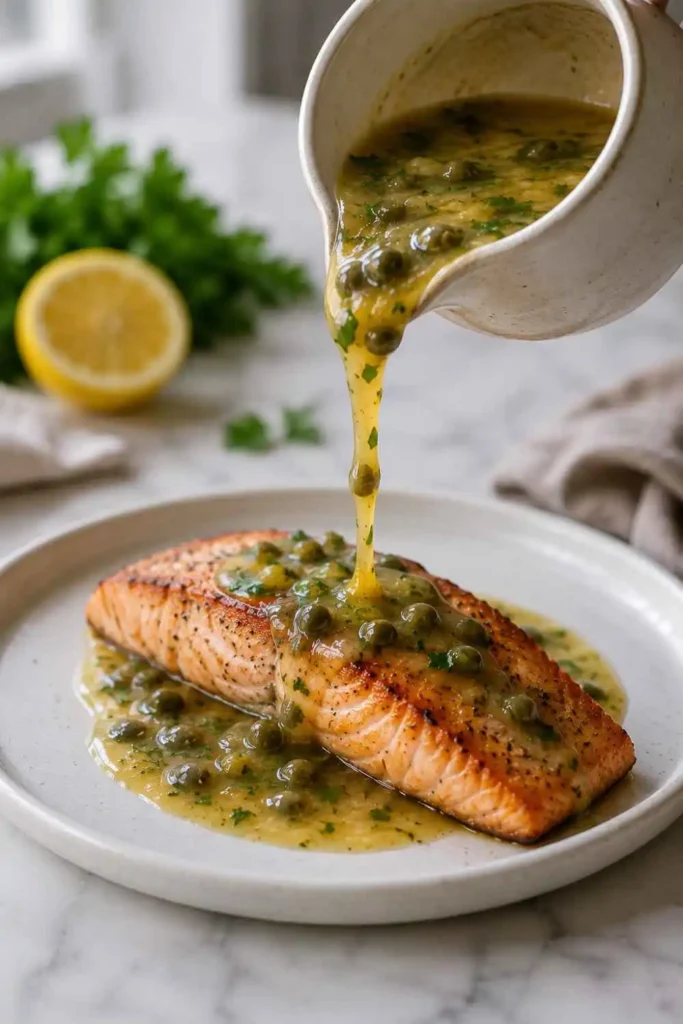
2. Fish Fillets (Salmon, Cod, Tilapia, Halibut) — drizzle generously over just-cooked fish right before serving. The sauce is acidic enough to cut through the richness of salmon perfectly. Do not simmer the fish in the sauce or the delicate flesh will fall apart — drizzle at the end.
3. Shrimp — cook shrimp in a separate pan, then toss directly in the finished caper sauce just before serving. 2 minutes of tossing over low heat is all you need.
4. Pasta — toss with al dente linguine or spaghetti, adding a splash of pasta water (about 3 tablespoons) to help the sauce coat every strand. Add chicken or shrimp on top and finish with lemon zest.
5. Steamed or Roasted Vegetables — asparagus, green beans, cauliflower, and zucchini are all fantastic with this sauce. Drizzle over vegetables right before serving. The sauce also works beautifully over baked potatoes.
Creative Uses You Have Not Tried Yet:
As a Salad Dressing: Let the sauce cool to room temperature, then whisk in 1 extra tablespoon of lemon juice and 1 tablespoon of olive oil to thin it slightly. It makes an incredible warm dressing for arugula, a classic Mediterranean chickpea salad, or a simple romaine salad. Try it over our Mediterranean Garbanzo Bean Salad — the briny capers echo the olives and the lemon ties everything together perfectly.
As a Marinade: This sauce works brilliantly as a quick marinade for chicken or shrimp before grilling. Cool the sauce fully, pour it over proteins, and marinate for 30 to 60 minutes in the refrigerator. The acid in the lemon gently tenderizes while the butter and garlic penetrate the meat.
As a Dipping Sauce: Serve warm in a small bowl alongside crusty sourdough, grilled flatbread, or even artichoke leaves. It is genuinely one of the most addictive dipping sauces once you try it this way.
Serving Notes:
- Serve the sauce hot for pasta and protein dishes — it should be poured or spooned immediately after it comes off the heat.
- For salad dressing use, room temperature is ideal. Cold sauce will congeal from the butter.
- Drizzle at the very end for fish and shrimp. Simmering delicate proteins in the sauce will overcook them.
- For a restaurant-quality presentation, finish with a few whole capers on top, a small curl of lemon zest, and a scattered pinch of fresh parsley just before bringing the plate to the table.
Storage, Shelf Life, and Reheating
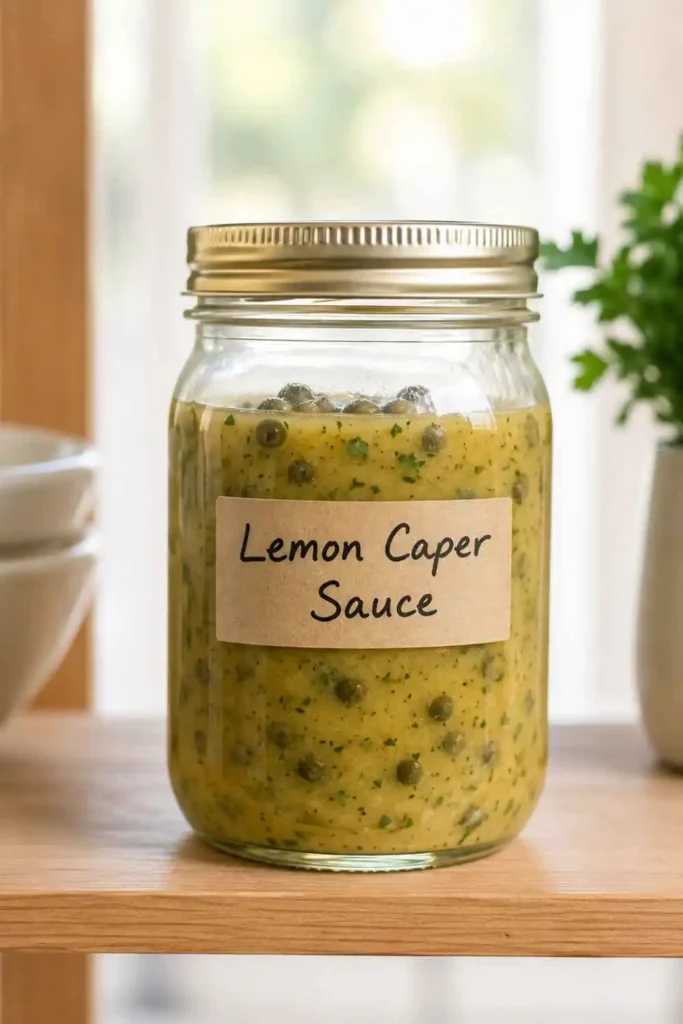
Refrigerator: Store in a sealed glass jar for up to 3 days. The butter will solidify when cold — this is completely normal. A mason jar or a small glass dressing container works best.
Freezer: This sauce can be frozen for up to 1 month. Freeze in an ice cube tray for easy single-serving portions. The emulsion may break slightly after freezing, but a quick reheat and whisk will bring it back.
Reheating: Always reheat over the lowest heat setting, adding 1 to 2 teaspoons of water or broth and whisking gently as it warms. High heat will cause the butter to separate and you will end up with a greasy, broken sauce.
Remix after separating: If the sauce has been refrigerated and the butter has fully solidified on top, scoop the whole jar into a small saucepan, add 1 teaspoon of water, and warm over low heat while whisking. It comes back together within 2 minutes.
FAQ
Can I make lemon caper sauce ahead of time?
Yes, up to 3 days ahead. Store in a sealed glass jar in the refrigerator and reheat gently over low heat before serving. Add a teaspoon of water while reheating to help it emulsify back together.
Why does my sauce keep breaking and going greasy?
Almost always a heat issue. Butter sauces are sensitive — keep your flame on the lowest setting throughout and never rush the process. If it does break, remove from heat, add a teaspoon of cold water, and whisk hard.
Can I use bottled lemon juice instead of fresh?
Technically yes, but the flavor difference is significant in a sauce this simple. Fresh lemon juice tastes bright and clean. Bottled juice can taste slightly flat or chemical. Use fresh whenever possible.
Is lemon caper sauce the same as piccata sauce?
Yes, they are the same sauce — lemon caper sauce is the everyday name while piccata sauce refers specifically to its Italian origin and traditional use with veal or chicken cutlets.
Can I make this dairy-free?
Absolutely. Substitute the butter with a good quality extra virgin olive oil. Use 5 to 6 tablespoons since olive oil has a lighter consistency. The flavor will be slightly different but still delicious.
How do I thin it out for use as a salad dressing?
Once the sauce is at room temperature, whisk in 1 tablespoon of olive oil and 1 to 2 teaspoons of extra lemon juice. This loosens it to a drizzle-able consistency perfect for salads.
Can I add white wine to this sauce?
Yes — this is a classic piccata variation. After cooking the garlic in butter, add ¼ cup dry white wine and let it reduce by half before adding the lemon juice and capers. It adds depth and reduces the overall fat slightly.

Lemon Caper Sauce Recipe
Course: Sauce, CondimentCuisine: Mediterranean, ItalianDifficulty: Easy6
Persons5
minutes5
minutes140
kcal10
minutesIngredients
½ cup salted butter, cut into pieces
2 cloves garlic, finely minced
2 tablespoons fresh lemon juice (about 1 large lemon)
4 tablespoons capers, drained
2 tablespoons flat-leaf parsley, finely chopped
Sea salt to taste
Directions
- Heat a small skillet over the lowest flame your stove allows. Add butter pieces and melt slowly over 2 minutes. Do not let it brown.
- Add minced garlic and stir constantly for 60 seconds until fragrant and pale golden. Keep the heat low.
- Whisk in the lemon juice and drained capers. Let the sauce simmer gently for 1 to 2 minutes, stirring occasionally, until glossy.
- Remove from heat. Stir in parsley. Taste and adjust salt only if needed.
- Serve immediately over chicken, fish, shrimp, or pasta.
Notes
- For Creamy Piccata Sauce: After step 2, transfer garlic butter to a tall jar, stir in lemon juice, and blend with an immersion blender for 20 to 30 seconds until pale and creamy. Stir in capers and parsley by hand and serve.
Storage: Refrigerate in a sealed glass jar for up to 3 days. Freeze for up to 1 month. Reheat over low heat with 1 to 2 teaspoons of water, whisking gently.
Substitutions:
Vegan: Replace butter with 6 tablespoons extra virgin olive oil
Lighter: Use 4 tablespoons butter + 2 tablespoons dry white wine
No capers: Use 3 tablespoons finely chopped green olives - Nutrition (per 2 tablespoon serving, approximate):
Calories 140 | Fat 15g | Carbohydrates 1g | Protein 0.4g | Sodium 270mg
Conclusion
Honestly, the first time I made this I could not believe something this quick and simple could taste this good. It is the kind of sauce that makes a Tuesday night dinner feel like you actually tried. Make it once and you will understand why it has been in Italian kitchens for generations. It keeps beautifully, works on almost anything, and takes exactly as long as it takes to scroll through your phone while it cooks.
Try it on grilled salmon tonight. Then try it on pasta tomorrow. Then come back and tell me what you put it on that I have not mentioned yet.