Enchilada Sauce Recipe – Bold, Easy & Homemade in 20 Minutes
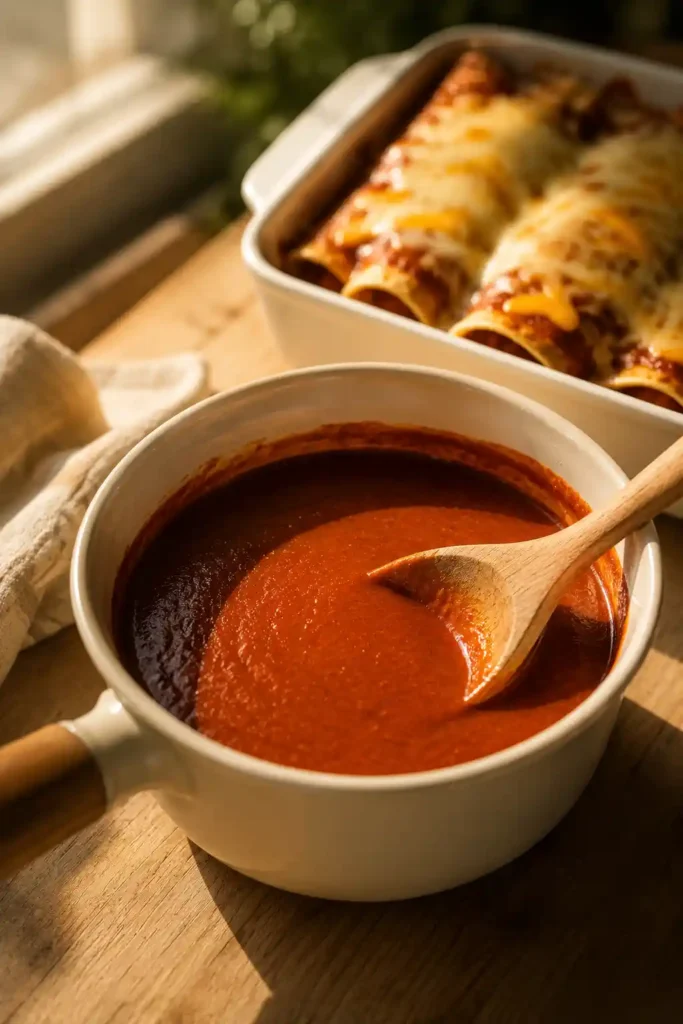
Once you try this homemade enchilada sauce recipe, you will never reach for the canned stuff again. I tested this three times to nail the right ratio of spices to liquid, and what I landed on is a deeply flavored, glossy, rust-red sauce that coats every enchilada beautifully.
It comes together with pantry staples you already have, takes about 20 minutes start to finish, and the flavor is so much richer than anything in a can. My family has been requesting it on repeat since the first batch.
The secret is in the roux. Toasting the spices directly in the hot oil and flour for about a minute unlocks a warm, earthy depth that makes this sauce taste like it simmered all day. Whether you are making classic chicken enchiladas, a cozy soup, or need a quick sauce for weeknight nachos, this is the recipe you will bookmark and come back to every time.
Recipe Highlights
| Detail | Info |
| Prep Time | 5 minutes |
| Cook Time | 15 minutes |
| Total Time | 20 minutes |
| Servings | Makes about 1½ cups (enough for 8–10 enchiladas) |
| Calories | ~45 per ¼ cup |
| Difficulty | Easy |
| Cuisine | Tex-Mex / Southwestern |
| Diet | Vegetarian, Vegan, Gluten-Free Option |
Why This Enchilada Sauce Recipe Works
This is the best enchilada sauce to make from scratch, and here is why it always turns out perfectly:
- Roux base = silky texture. Oil plus flour cooked together before adding liquid creates a sauce that stays smooth and glossy without separating.
- Toasted spices = deep flavor. Cooking the chili powder and cumin in the hot roux for 60 seconds before adding stock blooms the spices and brings out their full aroma.
- No tomatoes needed. Unlike store-bought versions, this authentic enchilada sauce gets its rich color and flavor from chili powder alone, not tomato paste (though you can add some if you love it saucier).
- Total pantry recipe. Every ingredient is something you likely already have. No grocery run needed.
- Customizable heat level. Start mild and add cayenne one pinch at a time until it is exactly right for your family.
Enchilada Sauce Ingredients and Substitutions
Here is what goes into this homemade red enchilada sauce and why each ingredient matters:
Oil (2 tablespoons): Any neutral oil works here. Avocado oil, olive oil, or even butter all produce a great result. Butter adds a slightly richer flavor.
All-Purpose Flour (2 tablespoons): This is what thickens the sauce. For a gluten-free enchilada sauce, swap in a 1-to-1 gluten-free flour blend, or skip the flour and stir in a cornstarch slurry (1 tablespoon cornstarch mixed with 1 tablespoon cold water) after the sauce reaches a simmer.
Chili Powder (¼ cup): This is the star. Use American-style chili powder, which is a blend of spices with mild heat. If you are outside the US, look for a blend that says “chili seasoning” rather than straight cayenne. Brand matters here. I like McCormick or Gebhardt.
Garlic Powder (½ teaspoon): Adds savory depth. Fresh garlic burns too easily in the roux, so powder works better here.
Ground Cumin (½ teaspoon): That warm, slightly smoky note you taste in every good Mexican-inspired dish comes from cumin. Do not skip it.
Dried Oregano (¼ teaspoon): Adds a subtle herby undertone that makes the sauce taste more complex.
Chicken or Vegetable Stock (2 cups): Use a good-quality stock because it makes a real difference. For a richer sauce, swap ¼ cup of the stock for tomato sauce or a spoonful of tomato paste.
Salt (to taste): Add at the end. The saltiness of your stock varies, so always season after tasting.
Optional add-ins: A pinch of cayenne for heat. A teaspoon of smoked paprika for smokiness. A tablespoon of tomato paste for a slightly deeper color. A splash of apple cider vinegar at the end for brightness.
How to Make Enchilada Sauce (Step-by-Step)
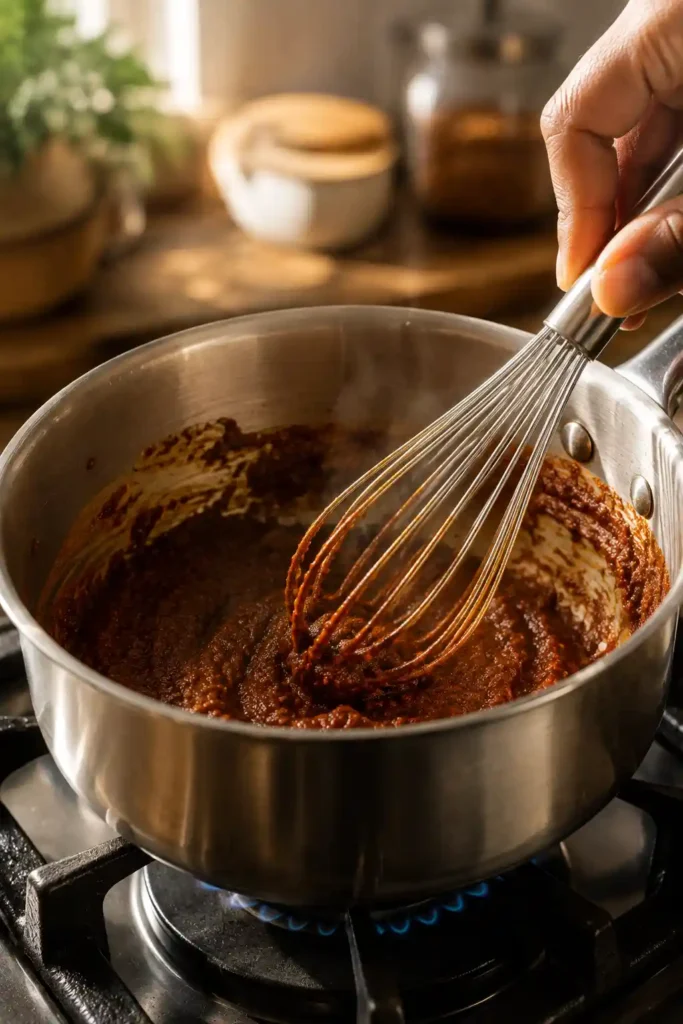
Step 1: Make the roux. Heat 2 tablespoons of oil in a small saucepan over medium heat. Add the flour and whisk constantly for 1 minute until it smells slightly nutty and turns a very pale golden color.
Step 2: Toast the spices. Add the chili powder, garlic powder, cumin, and oregano directly to the roux. Whisk constantly for exactly 60 seconds. The mixture will look thick and paste-like. This step is where the flavor actually happens, so do not rush it.
Step 3: Add the stock slowly. While whisking, pour in the stock gradually, about ¼ cup at a time. This prevents lumps. Once about half the stock is incorporated, you can pour in the rest more quickly. Whisk until completely smooth with no lumps.
Step 4: Simmer until thickened. Bring the sauce to a low boil, then reduce heat to medium-low and simmer uncovered for 10 to 15 minutes, stirring occasionally. The sauce should reduce slightly and coat the back of a spoon. If you drag your finger across the back of the spoon and the line holds, it is ready.
Step 5: Season and taste. Add salt a little at a time, tasting as you go. I usually add ½ teaspoon. This is also the moment to add a pinch of cayenne, a splash of vinegar, or any other adjustments.
Step 6: Use immediately or store. The sauce is ready to use right away. See the storage section below for how to keep it fresh all week.
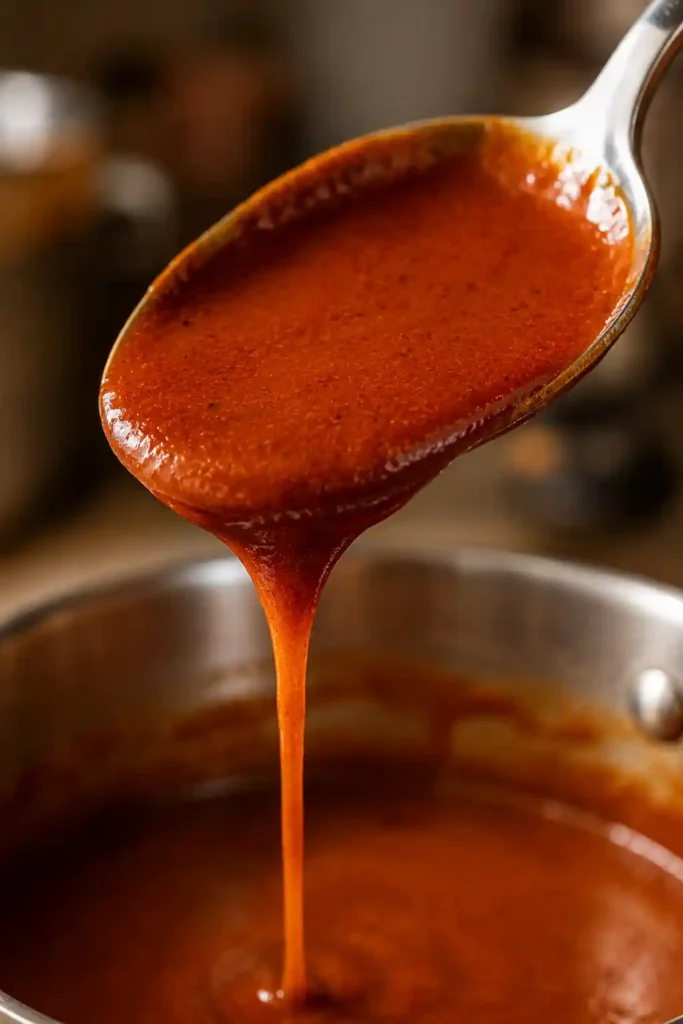
Consistency and Troubleshooting Guide
Sauce too thick? Whisk in extra stock, one tablespoon at a time, until it reaches the consistency you want. The sauce thickens as it cools, so keep that in mind.
Sauce too thin? Continue simmering uncovered for another 5 minutes. If still too loose, stir in a cornstarch slurry (1 teaspoon cornstarch mixed with 1 teaspoon cold water) and stir over medium heat for 2 minutes.
Sauce has lumps? Pour it through a fine mesh strainer and whisk smooth. This happens if the stock was added too quickly before the roux was fully incorporated.
Sauce tastes flat? Add more chili powder ½ teaspoon at a time, a pinch of cumin, and a small splash of apple cider vinegar. Acid brightens the whole thing.
Sauce too spicy? Stir in 2 tablespoons of tomato sauce or a splash of stock to mellow the heat. A tiny pinch of sugar also helps cut spice without changing the flavor profile much.
Can I make it without flour? Yes. Skip the roux entirely and simmer all the spices directly in lightly oiled stock. Then thicken with a cornstarch slurry at the end. The texture will be slightly less glossy but still very good.
How to Use Homemade Enchilada Sauce (Pairing Guide)
Classic Uses
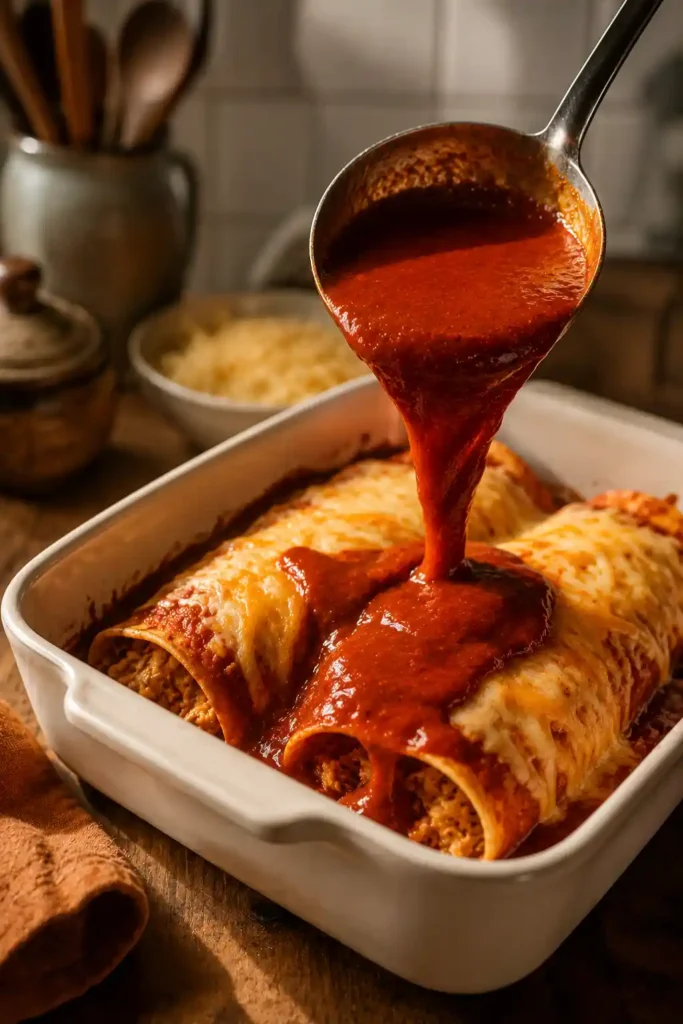
Traditional Enchiladas: This is the obvious one. Pour about ¼ cup into the bottom of your baking dish, dip each tortilla in the warm sauce before filling and rolling, and pour the rest over the top. Bake at 375°F for 20 minutes. The sauce seeps into the tortillas and creates that tender, flavorful bite that defines great enchiladas.
Chicken Enchilada Soup: Stir ½ cup of this sauce into a pot of chicken broth, shredded chicken, black beans, corn, and diced tomatoes. Simmer 15 minutes. Serve with sour cream and tortilla strips. You can pair this beautifully alongside a Roasted Sweet Potato Black Bean Salad for a complete meal.
Enchilada Casserole: Layer corn tortillas, filling, and sauce in a baking dish instead of rolling. This is the lazy version and honestly just as delicious. Top with cheese and bake until bubbling.
Beef or Veggie Enchiladas: The sauce works on any protein. Shredded beef, roasted cauliflower, black beans, or ground turkey all taste incredible underneath it.
Creative Uses
As a taco or burrito sauce: Use it the same way you would salsa. Drizzle 2 tablespoons over a fully assembled taco instead of hot sauce.
As a marinade for grilled chicken: Mix ¼ cup enchilada sauce with 2 tablespoons olive oil and marinate chicken thighs for 2 to 4 hours before grilling. The chili and cumin create a beautiful charred crust.
Stirred into scrambled eggs or shakshuka: A spoonful of this sauce added to your eggs while they cook gives them a warm, smoky flavor that is completely different from plain eggs. Pair with a fresh Mediterranean Garbanzo Bean Salad on the side for a balanced lunch.
As a dipping sauce for quesadillas and chips: Warm it up and serve in a small bowl for dipping. Much better than salsa straight from a jar.
Serving Instructions
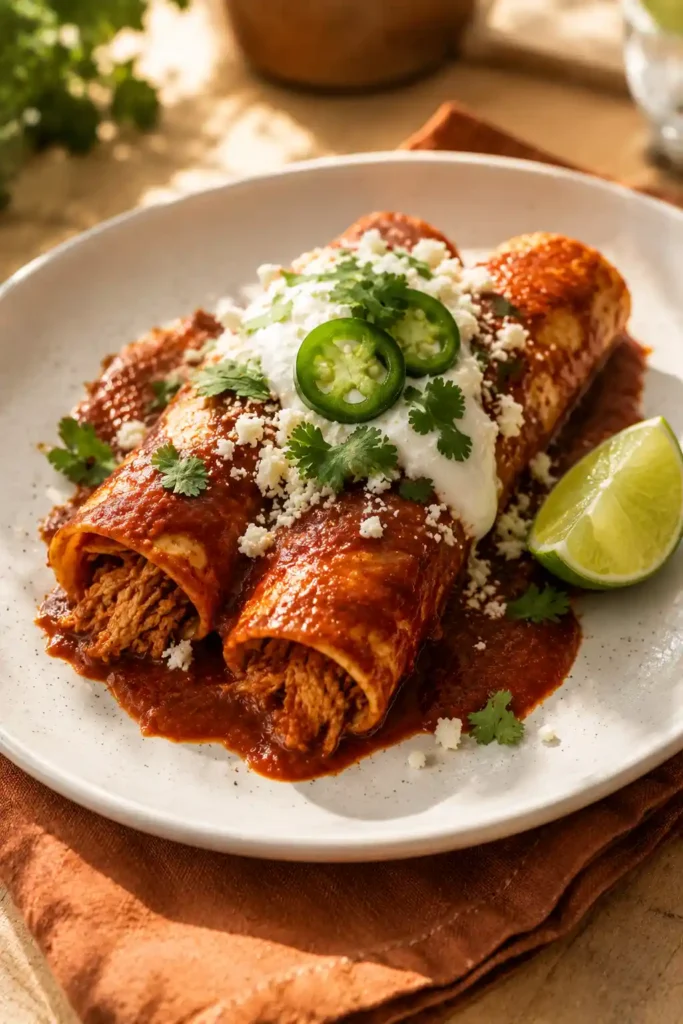
Serve this sauce hot, poured directly over filled enchiladas right before baking. If using as a dipping sauce or drizzle, warm gently in a small saucepan over low heat. It should never be served cold since the roux-based texture becomes thick and slightly gluey when chilled.
Garnishing Ideas
Top finished enchiladas with crumbled cotija cheese, a dollop of sour cream, sliced jalapeños, fresh cilantro, and a squeeze of lime. The contrast of cool, creamy toppings against the warm, spiced sauce is what makes the whole dish look and taste restaurant-quality. You can also drizzle a little crema in thin lines across the top for a prettier presentation.
Storage, Shelf Life, and Remixing
Refrigerator: Once the sauce has cooled to room temperature, transfer it to a mason jar or airtight container. It keeps in the fridge for up to 5 days. I always make a double batch on Sunday and use it through the week.
Freezer: GimmeSomeOven says not to freeze it, and yes, it can separate. But here is the fix: freeze it in a zip-top bag laid flat. When you thaw it in the fridge overnight, re-whisk it vigorously in a small saucepan over medium-low heat for 2 to 3 minutes, adding a tablespoon of stock if needed. It comes back together beautifully. Freezes well for up to 3 months.
Canning: This sauce can be home-canned using a pressure canner (not water bath, since it contains flour). Transfer hot sauce to sterilized jars, leave ½-inch headspace, and process at 10 PSI for 35 minutes for half-pint jars. This is a great project for making your homemade enchilada sauce easy to grab all winter.
Sauce separated in the fridge? This is normal. Simply re-whisk while warming in a small saucepan over medium-low heat. It will come back to a smooth, glossy consistency in about 2 minutes.
You May Also Like
- Tzatziki Sauce Recipe – Thick, Creamy & Easy
- Chimichurri Sauce Recipe – Bold, Herby & 10 Minutes
- Lemon Butter Sauce – Rich, Glossy & Done in 5 Minutes
- Best Lemon Caper Sauce Recipe (Ready in 10 Minutes!)
- 20 Healthy Salad Dressing Recipes You Can Make at Home
FAQ: Enchilada Sauce Recipe
What is enchilada sauce?
Enchilada sauce is a smooth, spiced sauce made to coat corn tortillas before they are filled, rolled, and baked. It is thinner and more liquid than salsa and gets its flavor from a blend of dried chili spices rather than fresh peppers or tomatoes. Traditional Mexican enchilada sauce often starts with dried whole chiles like ancho and pasilla, while Tex-Mex versions like this one use chili powder for convenience.
What is enchilada sauce made of?
The core enchilada sauce ingredients are oil, flour (for the roux), American-style chili powder, garlic powder, ground cumin, dried oregano, and chicken or vegetable stock. That is it. No tomatoes are needed for this version, though you can add tomato paste if you prefer.
What spices are in enchilada sauce?
The main spices in enchilada sauce are chili powder, cumin, garlic powder, and oregano. Some versions add smoked paprika, cayenne for heat, or a pinch of cinnamon for warmth. If you want to go deeper into an authentic enchilada sauce made with whole dried chiles, The Daring Gourmet has an excellent deep-dive on the traditional method.
Can I freeze homemade enchilada sauce?
Yes, you can. Freeze it flat in a zip-top bag for up to 3 months. When reheating, whisk it in a saucepan with a splash of stock over medium-low heat to restore the smooth texture.
My sauce tastes bitter. What happened?
Bitter sauce usually means the chili powder burned during the toasting step. Make sure your heat is no higher than medium and whisk constantly during that 60 seconds. If it smells burnt, start over.
Can I make this without oil?
You can reduce the oil to 1 teaspoon if needed, but skipping it entirely makes the roux difficult to form. Alternatively, skip the roux and use a cornstarch slurry to thicken.
How do I make it spicier?
Add cayenne pepper ¼ teaspoon at a time after the sauce has simmered, tasting between additions. You can also substitute some of the regular chili powder with chipotle chili powder for smoky heat.
Can I make a bigger batch for canning or meal prep? Absolutely. This recipe doubles and triples perfectly. For an easy DIY enchilada sauce to stock your pantry, triple the recipe and store in mason jars in the fridge for up to 5 days, or freeze for up to 3 months.

Homemade Enchilada Sauce Recipe
Course: SauceCuisine: Tex-Mex / SouthwesternDifficulty: Easy6
servings5
minutes15
minutes20
minutesThis rich, glossy homemade enchilada sauce comes together in 20 minutes with pantry spices and tastes infinitely better than anything from a can. A simple roux base keeps it silky smooth, toasted chili powder gives it deep earthy flavor, and it works on everything from classic enchiladas to soups, nachos, and marinades.
Ingredients
2 tablespoons avocado oil or olive oil
2 tablespoons all-purpose flour (or 1-to-1 GF flour for gluten-free)
¼ cup American-style chili powder
½ teaspoon garlic powder
½ teaspoon ground cumin
¼ teaspoon dried oregano
2 cups chicken or vegetable stock
½ teaspoon fine sea salt (or to taste)
Optional: 1 tablespoon tomato paste for a deeper color; ¼ teaspoon cayenne for heat; ½ teaspoon smoked paprika for smokiness; 1 teaspoon apple cider vinegar for brightness
Directions
- Heat oil in a small saucepan over medium heat. Add flour and whisk constantly for 1 minute until pale golden and nutty-smelling.
- Add chili powder, garlic powder, cumin, and oregano. Whisk constantly for 60 seconds until the mixture is fragrant and paste-like.
- Gradually pour in the stock ¼ cup at a time, whisking constantly to prevent lumps. Once half the stock is in, add the rest in a steady pour and whisk smooth.
- Increase heat to medium-high and bring to a low boil. Reduce to medium-low and simmer uncovered for 10 to 15 minutes, stirring occasionally, until slightly thickened and coating the back of a spoon.
- Season with salt to taste. Add any optional extras (tomato paste, cayenne, vinegar) at this stage.
- Use immediately or cool and store in a glass jar in the fridge for up to 5 days.
Storage Notes
- Refrigerator: up to 5 days in a sealed glass jar. Freezer: up to 3 months in a zip-top bag; re-whisk after thawing.
Substitutions
GF flour or cornstarch slurry (1:1 cornstarch and cold water) for gluten-free. Butter instead of oil for a richer flavor. Vegetable stock for vegan. - Approximate Nutrition (per ¼ cup)
Calories: 45 | Fat: 3g | Carbs: 4g | Protein: 1g | Sodium: 270mg
Closing Note
This enchilada sauce recipe is one of those things that once you make it yourself, you will never understand why you bought it in a can for so long. The flavor is just in a completely different league. Make a big batch, stash half in the freezer, and you will thank yourself on a busy Tuesday night when dinner needs to come together fast.
Cooking the roux right and toasting the spices are the two steps that make the difference. Do not rush those, and everything else will fall into place. I hope your family loves this as much as mine does.
If you are looking for more ideas to go alongside it, the 7 Best Dipping Sauces Recipes collection has some great companions for a Mexican-night spread.