Chimichurri Sauce Recipe – Bold, Herby & 10 Minutes
There are sauces you make once and immediately wonder how you ate food without them. This chimichurri sauce recipe is that sauce. I first made it after my neighbor brought a jar to a backyard cookout. She drizzled it over grilled skirt steak, spooned it onto potatoes, and used what was left as a salad dressing.
I asked for the recipe on the spot. After testing it six times in my own kitchen—adjusting the garlic, playing with the vinegar ratio, trying both hand-chopped and food-processor versions—this is the one that stuck. Bright, punchy, garlicky, with just the right amount of heat. It takes 10 minutes and uses pantry staples. Once you start keeping a jar in your fridge, you will find excuses to put it on everything.
| Prep: 10 min | Cook: 0 min | Total: 10 min | Calories: ~160 per serving | Yield: ¾ cup (serves 4–6) | Difficulty: Easy | Cuisine: Argentine |
Why This Recipe Works
- Hand-chopped herbs give the best texture. A food processor makes the sauce too fine and can turn it bitter by bruising the parsley. Chopping by hand takes an extra 3 minutes and is completely worth it.
- Resting time matters. Letting the sauce sit for 15–20 minutes before serving allows the garlic and red pepper to bloom in the oil, deepening the flavor significantly.
- Vinegar is added in stages. Starting with half and tasting before adding more gives you control over the tartness—every bunch of parsley has slightly different intensity.
- The olive oil-to-herb ratio is intentional. Too much oil makes it greasy; too little makes it dry and clumpy. The ratio here gives you a sauce that clings beautifully to meat or vegetables.
- One red chili swap changes everything. Swapping dried flakes for a fresh Fresno chili adds fruity heat that makes the sauce taste more complex without any extra effort.
Ingredients, Ratios & Substitutions
What You Need:
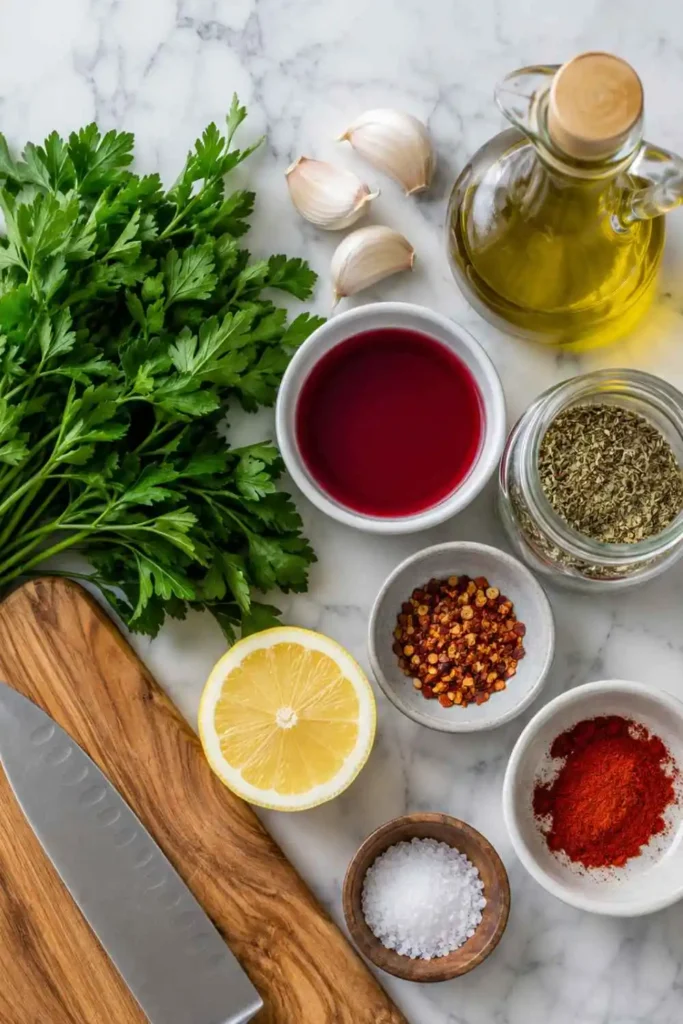
- 1 cup fresh flat-leaf parsley, finely hand-chopped (about 1 large bunch, thick stems removed) — flat-leaf only; curly parsley has a watery, bland flavor
- 2 tablespoons fresh cilantro, finely chopped (optional but adds a fresh brightness—use up to ½ cup if you love it, or skip entirely)
- 3 cloves garlic, minced — fresh only; jarred garlic makes the sauce taste flat
- ¼ cup extra-virgin olive oil — the base of the sauce; use good quality here since it’s uncooked
- 2 tablespoons red wine vinegar — classic and sharp; white wine vinegar works for a milder tang
- 1 teaspoon dried oregano — rub it between your palms before adding to wake up the oils
- ½ teaspoon red pepper flakes — or 1 small Fresno chili, finely minced, for fresh fruity heat
- ¼ teaspoon smoked paprika — optional but adds a subtle smokiness that pairs beautifully with grilled meat
- ½ teaspoon fine sea salt — plus more to taste
- 1 teaspoon fresh lemon juice — this is the secret ingredient most recipes skip; a small squeeze brightens the whole sauce
Substitutions:
- No red wine vinegar? Sherry vinegar is actually the most traditional swap and adds a deeper, nuttier tang.
- Vegan/dairy-free: Already is. No changes needed.
- Low-acid option: Reduce vinegar to 1 tablespoon and increase lemon juice to 2 teaspoons.
- Red chimichurri variation: Add 1 tablespoon tomato paste + ½ teaspoon more smoked paprika. This is popular in Uruguay and great on chicken.
Step-by-Step Instructions
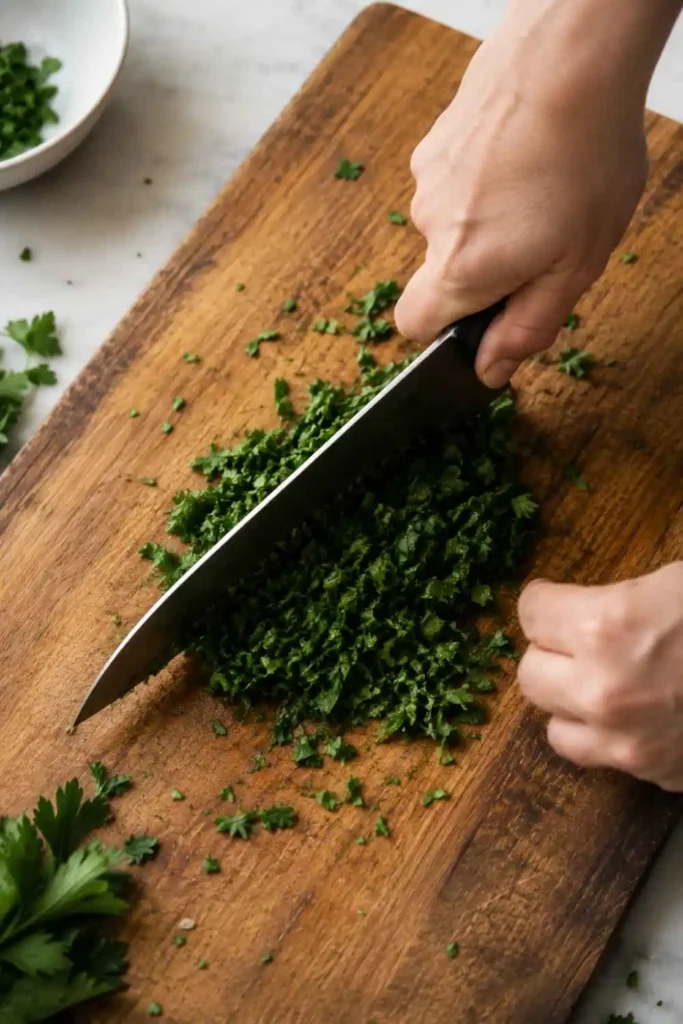
Step 1. Remove all thick parsley stems. Pile the leaves and thin stems on your cutting board and chop very finely using a rocking motion. You want a rough, textured mince—not a paste. This takes about 3 minutes and is the most important step.
Step 2. In a medium bowl, whisk together the olive oil, 1 tablespoon of the red wine vinegar, minced garlic, dried oregano, red pepper flakes, smoked paprika, and salt. Stir well until everything is fully combined and the oil looks slightly cloudy from the garlic.
Step 3. Fold in the hand-chopped parsley and cilantro (if using). Stir gently until the herbs are evenly distributed and the sauce holds together when you drag a spoon through it.
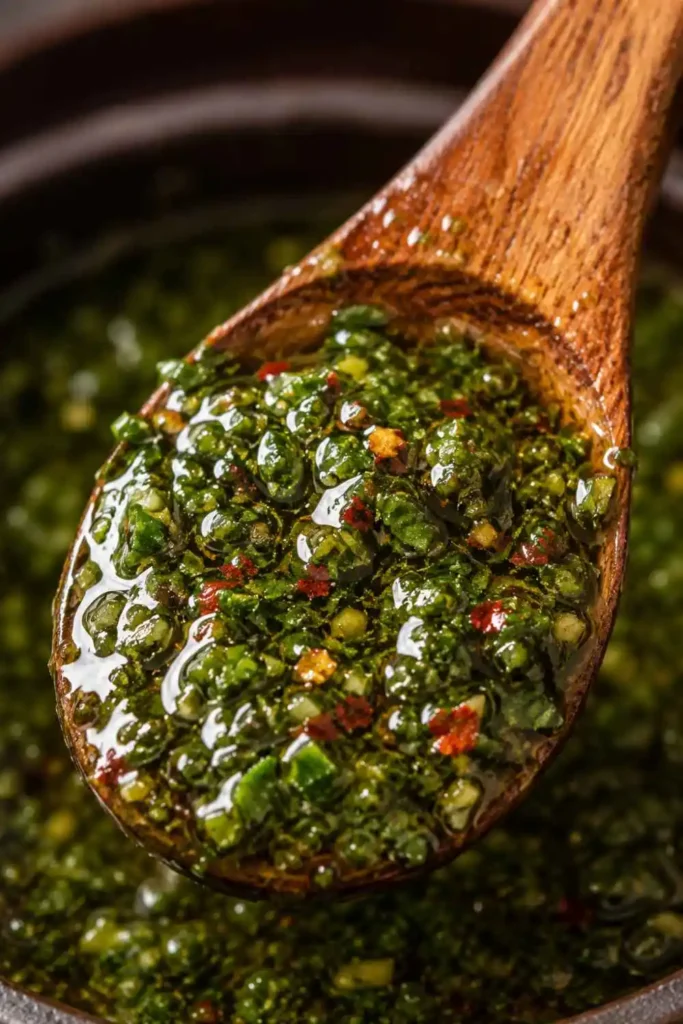
Step 4. Taste now. Add the remaining tablespoon of vinegar if you want more tang. Add the lemon juice. Taste again and adjust salt.
Step 5. Cover and let rest at room temperature for 15–20 minutes before serving. The sauce will deepen in color slightly and the garlic flavor will round out. This resting step is skipped by most recipes—do not skip it.
Consistency & Troubleshooting Guide
Too thick / clumpy? The herbs have absorbed all the oil. Drizzle in 1–2 more teaspoons of olive oil and stir to loosen. Do not add water—it will dilute the flavor and cause the sauce to separate.
Too thin / oily? Add another ¼ cup of chopped parsley. It will absorb the excess oil and bring the sauce back into balance within 5 minutes.
Too garlicky? Fresh garlic intensifies as it sits. If the sauce has been refrigerated overnight and tastes sharp, stir in a small squeeze of lemon juice—the acid mellows raw garlic quickly.
Too acidic? A pinch of sugar (just ¼ teaspoon) balances sharpness without making the sauce sweet. Alternatively, add a teaspoon more olive oil.
Sauce separated in the fridge? Completely normal. Chimichurri is not emulsified. Stir vigorously or shake the jar before serving. You can also let it come to room temperature for 10 minutes—the oil will reintegrate more easily.
Herbs turned dark? This happens after 3–4 days. The sauce is still safe to eat and the flavor is fine, but for the best green color, serve within 2 days of making.
How to Use Chimichurri: The Full Pairing Guide
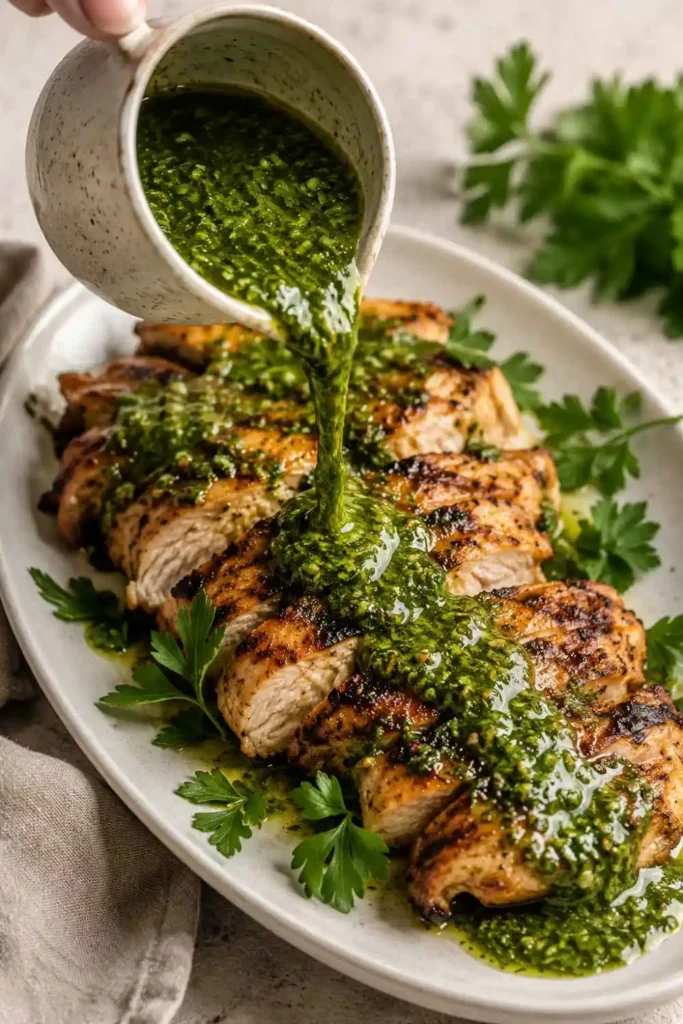
Classic Pairings (Traditional)
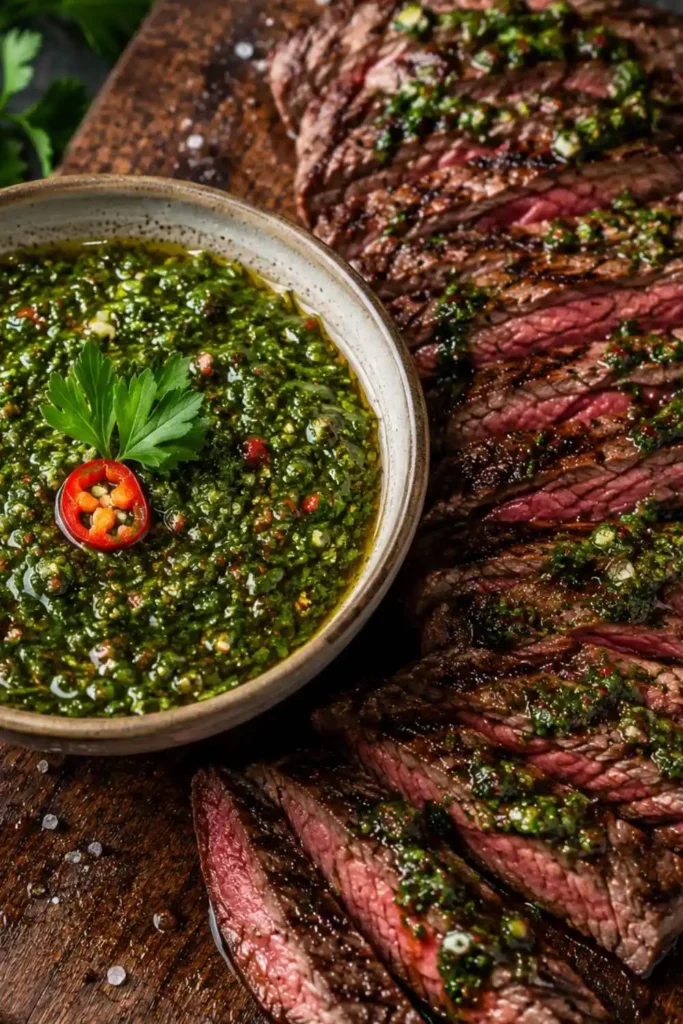
Grilled Steak: Spoon generously over the cut side of a just-rested skirt or flank steak. Let it sit 2 minutes before slicing so the sauce seeps into the meat. Do not cook the chimichurri—heat kills the fresh herb flavor.
Grilled Chicken Thighs: Use as a finishing sauce AND a 30-minute marinade beforehand. Coat the chicken, let it marinate in the fridge, grill or pan-sear, then serve with a fresh spoonful on top.
Roasted Potatoes: Toss hot roasted potatoes in 3 tablespoons of chimichurri right out of the oven. The heat opens up the garlic and creates an incredible herbaceous coating.
Creative & Unexpected Uses
Grain Bowls: Whisk 2 tablespoons into cooked farro, quinoa, or brown rice while warm. It acts like a warm-weather pesto and makes a complete side dish in under 2 minutes.
Chimichurri Scrambled Eggs: Drizzle 1 tablespoon over scrambled eggs just before they finish setting in the pan. The herbs wilt slightly and the garlic infuses the eggs. Sounds strange, tastes incredible.
Salad Dressing: Thin with 1 extra teaspoon of red wine vinegar and toss with arugula, shaved fennel, and cherry tomatoes. The peppery greens are a natural match for the garlicky oil.
Serving Temperature & Method
Chimichurri is always served at room temperature. Cold chimichurri from the fridge tastes muted because the olive oil solidifies slightly and the garlic doesn’t bloom. Pull it out 10–15 minutes before you need it. Drizzle at the very end of cooking, never simmer in the pan.
Presentation Tips
Serve in a small ceramic bowl with a spoon for a rustic look. Garnish with a fresh parsley sprig and a thin slice of red chili for color. For dinner parties, a shallow dish with chimichurri pooled in the center and a drizzle of finishing olive oil on top looks beautiful next to a wooden board of grilled meats.
Storage, Shelf Life & Remixing Notes
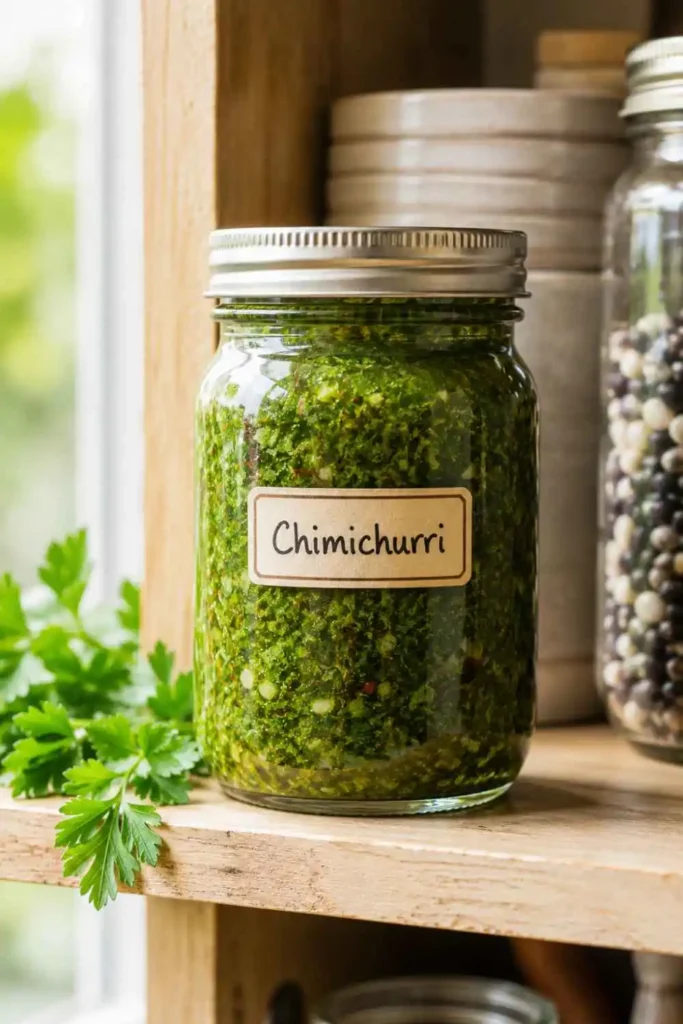
Refrigerator: Transfer to a small glass jar with a tight-fitting lid. Press a piece of plastic wrap directly on the surface of the sauce before closing the lid—this reduces air contact and keeps the herbs green longer. Keeps for up to 5 days. (Most recipes say 4; the plastic wrap trick buys you an extra day.)
Freezer: Spoon into an ice cube tray, freeze solid (about 2 hours), then pop out and transfer to a zip-top freezer bag. Label with the date. Keeps for 3 months. To use: thaw one or two cubes at room temperature for 20 minutes, or overnight in the fridge. Do not microwave—it kills the fresh herb flavor and turns the parsley army green.
Remixing after refrigerating: The olive oil will solidify and the sauce will look thick and chunky. Do not panic. Let it sit at room temperature for 10 minutes, then stir vigorously. Add a small splash of red wine vinegar if it still seems flat after resting.
Batch making: Chimichurri doubles and triples perfectly. If making a big batch, add the vinegar and lemon juice right before serving rather than at the beginning—this keeps the herbs brighter longer.
You May Also Like
- Tzatziki Sauce Recipe – Thick, Creamy & Easy
- 7 Best Dipping Sauces Recipes (Easy & Homemade!)
- Lemon Butter Sauce – Rich, Glossy & Done in 5 Minutes
FAQ
Can I use a food processor to make chimichurri sauce?
You can, but the texture will be smoother and the flavor slightly less vibrant. A food processor bruises the parsley leaves, which can make the sauce taste slightly bitter after a day in the fridge. If using one, pulse only 3–4 times—you want a rough chop, not a puree.
What’s the difference between green and red chimichurri?
Green (verde) chimichurri is what most people know: parsley, garlic, olive oil, vinegar. Red chimichurri (rojo) adds tomato paste, roasted red pepper, or additional paprika for a richer, deeper flavor. Red is more common in Uruguay and works particularly well as a chicken marinade.
My chimichurri is too garlicky. Can I fix it?
Yes. Add a squeeze of lemon juice (acid dulls sharp raw garlic) and let the sauce rest another 15 minutes. If it still tastes too sharp, drizzle in one more teaspoon of olive oil.
Can I make chimichurri ahead of time?
It actually tastes better after 30–60 minutes because the garlic and herbs have time to infuse the oil. You can make it up to 24 hours ahead; keep covered at room temperature if serving that day, or refrigerate and bring back to room temperature before serving.
Is chimichurri sauce gluten-free and vegan?
Yes to both. This recipe contains no gluten, no dairy, no eggs, and no animal products of any kind. It is naturally vegan, paleo, and Whole30-compliant.
Can I substitute dried parsley?
No. Dried parsley has almost no flavor and will give you a muddy, lifeless sauce. Fresh flat-leaf parsley is non-negotiable for authentic chimichurri. If fresh parsley is unavailable, a mix of fresh basil and fresh chives is the closest alternative.
How do I know if chimichurri has gone bad?
Discard it if it smells sour (beyond the normal vinegar tang), if you see mold, or if the herbs have turned uniformly black rather than just slightly darker. When stored properly in a sealed glass jar, it will not go bad before the 5-day mark.

Chimichurri Sauce Recipe – Bold, Herby & 10 Minutes
Course: ArgentineCuisine: ArgentineDifficulty: Easy4
servings10
minutes00
minutes160
kcal15
min25
minutesThis authentic Argentine chimichurri sauce is bold, herby, and packed with fresh parsley, minced garlic, and zesty red wine vinegar. Ready in just 10 minutes, it’s the ultimate vibrant topping and marinade for grilled steak, chicken, and roasted potatoes.
Ingredients
1 cup fresh flat-leaf parsley, finely hand-chopped (thick stems removed)
2 tablespoons fresh cilantro, finely chopped (optional)
3 cloves garlic, minced
¼ cup extra-virgin olive oil
2 tablespoons red wine vinegar (divided)
1 teapoon dried oregano
½ teaspoon red pepper flakes
¼ teaspoon smoked paprika
½ teaspoon fine sea salt, plus more to taste
1 teaspoon fresh lemon juice
Directions
- Finely hand-chop the parsley (and cilantro if using) using a rocking knife motion. You want a rough, textured mince—not a paste.
- In a medium bowl, whisk together the olive oil, 1 tablespoon red wine vinegar, minced garlic, oregano, red pepper flakes, smoked paprika, and salt until combined.
- Fold in the chopped herbs and stir until evenly distributed.
- Taste. Add remaining 1 tablespoon vinegar and the lemon juice. Adjust salt as needed.
- Cover and rest at room temperature for 15–20 minutes before serving. Stir once more and serve.
Storage
- Refrigerate in a sealed glass jar, plastic wrap pressed directly on the sauce surface, for up to 5 days. Freeze in ice cube trays for up to 3 months.
Substitutions
Red wine vinegar → sherry vinegar for deeper flavor
Red pepper flakes → 1 minced fresh Fresno chili
Cilantro is optional; omit for a traditional Argentine version
Red chimichurri variation: add 1 tablespoon tomato paste + ½ teaspoon extra smoked paprika - Approximate Nutrition (per 3-tablespoon serving)
Calories: 160 | Fat: 17g | Carbs: 1g | Protein: 0.4g | Sodium: 290mg | Vitamin C: 12% DV