Lemon Butter Sauce – Rich, Glossy & Done in 5 Minutes
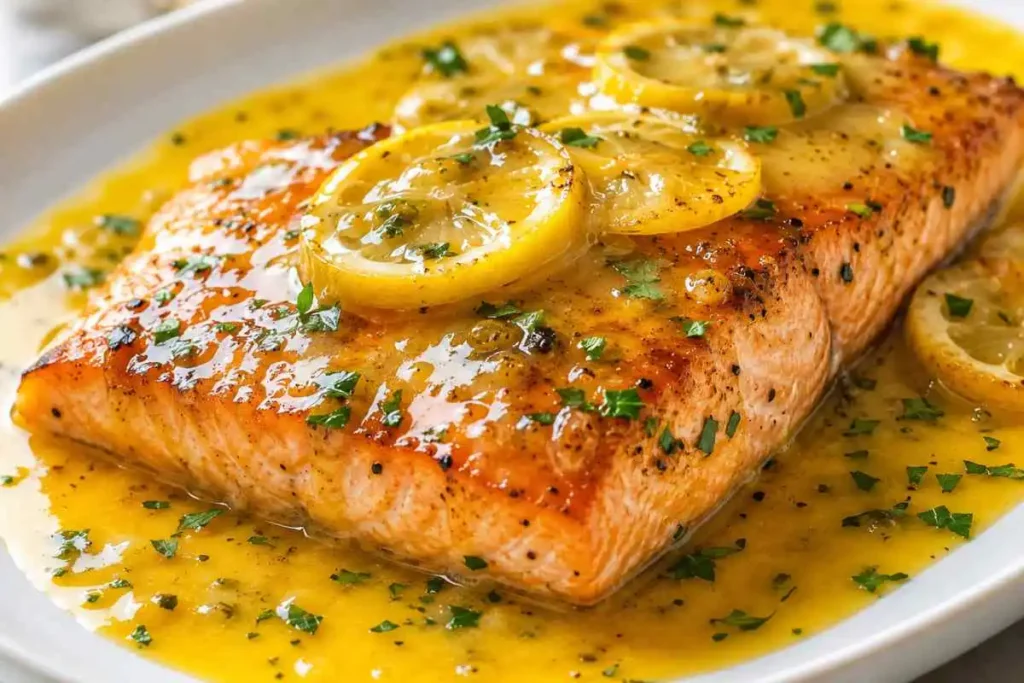
The first time I made lemon butter sauce properly, I drizzled it over some plain roasted broccoli and my husband asked if I had ordered from a restaurant. It’s that kind of sauce. Bright from real lemon juice, rich from cold butter going in at the right moment, and silky in a way that feels way fancier than the five minutes it takes to make. No cream, no thickeners, no fancy equipment.
If your pan sauce keeps splitting, if your butter sauce always ends up greasy, or if you’ve just been melting butter and calling it a sauce, this recipe will change things for you. I tested this four times to nail the emulsification, and I’m sharing every detail so yours comes out glossy and perfect on the first try.
Recipe Highlights
| Prep Time | 2 minutes |
| Cook Time | 3 minutes |
| Total Time | 5 minutes |
| Servings | 4 (yields approx. ½ cup) |
| Calories | ~105 per serving |
| Difficulty | Easy |
| Cuisine | French-inspired / American |
| Course | Sauce, Condiment |
Why This Recipe Works
- Cold butter is the secret. Adding cold butter cut into pieces off the heat creates a smooth, emulsified sauce instead of a greasy puddle. This is the same technique used in restaurant beurre blanc, simplified for home cooks.
- Real lemon juice only. Bottled juice is flatter and more acidic in an unpredictable way. Fresh lemon is brighter and balances the butter perfectly.
- No cream needed. The sauce thickens and goes silky naturally through emulsification. Cream-based versions are thicker but mask the clean lemon flavor.
- Ready in under 5 minutes. You can finish this sauce while your fish is resting or your pasta is draining. It fits into any weeknight workflow.
- Totally customizable. One base recipe, many directions: add capers for fish, Parmesan for pasta, or fresh thyme for vegetables.
Ingredients, Ratios & Substitutions
Serves 4 | Yields approx. ½ cup
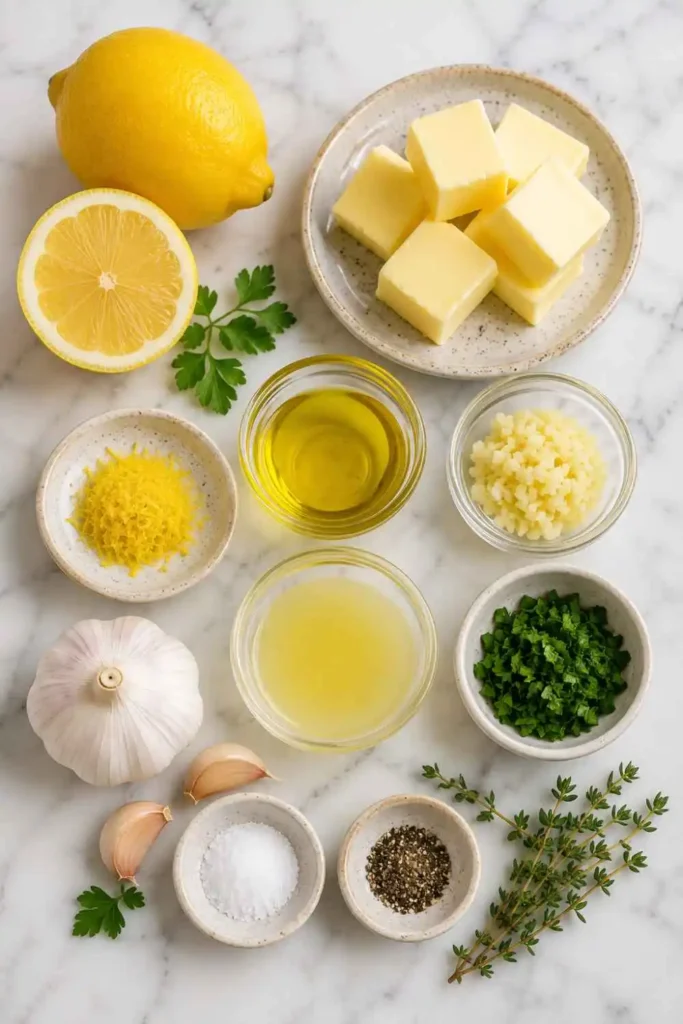
- 4 tablespoons (½ stick) unsalted butter, cold, cut into 4 pieces – Cold butter is non-negotiable for a smooth emulsified sauce. If you only have salted butter, skip the added salt and season at the end.
- 2 tablespoons fresh lemon juice (about 1 lemon) – Always fresh. This is the backbone of the sauce.
- 2 garlic cloves, finely minced or grated – Grated garlic melts into the sauce better than chopped. Use a microplane if you have one.
- ¼ teaspoon fine sea salt – Add more to taste at the end.
- 1 tablespoon fresh parsley, finely chopped – Optional but adds color and freshness.
- Pinch of red pepper flakes – Optional, adds a gentle warmth.
Smart Swaps:
- Dairy-free/vegan: Use a high-quality vegan butter like Miyoko’s. Add it off the heat the same way. Skip extra salt as most vegan butters are pre-salted.
- Extra richness: Stir in 1 tablespoon of heavy cream just before adding the butter. This stabilizes the emulsion and makes a creamier version great for pasta.
- Herb variations: Swap parsley for fresh tarragon (amazing with fish), fresh chives (elegant with potatoes), or fresh dill (perfect with salmon).
- Add capers: Stir in 1 tablespoon of capers with the garlic for a bright, briny version that pairs beautifully with white fish or chicken.
See our Lemon Dressing Recipe for a lighter, no-cook version]
Step-by-Step Instructions
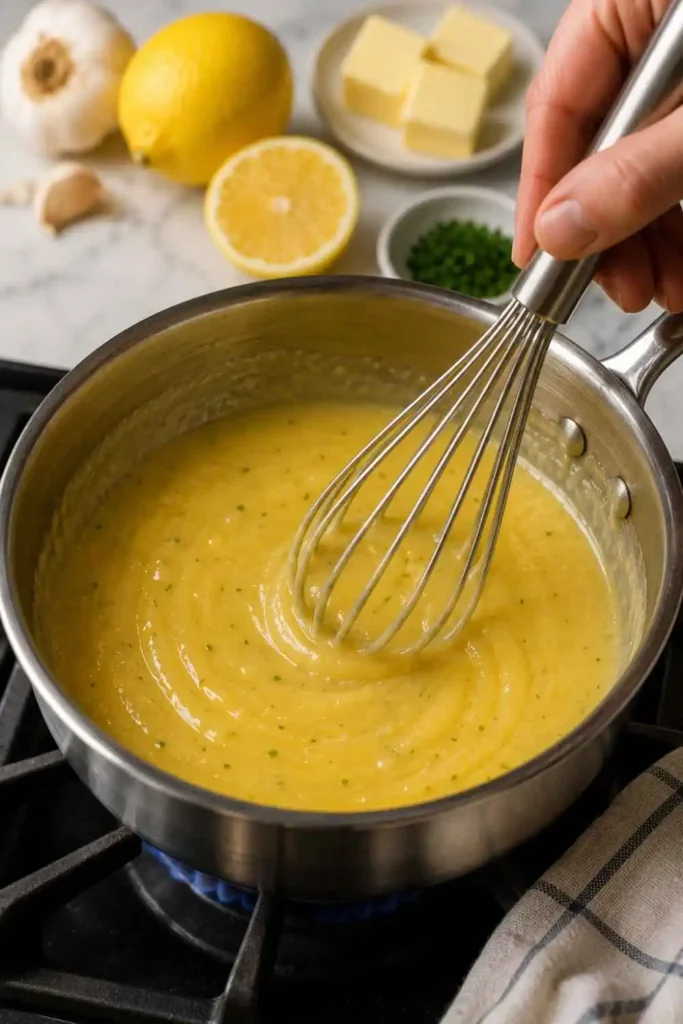
Step 1 – Prep your butter. Cut your cold butter into 4 equal pieces and set it aside at room temperature for literally 2 minutes. You want it cold but not fridge-hard. This is the single most important prep step for a glossy sauce.
Step 2 – Bloom the garlic. In a small saucepan over medium-low heat, add 1 piece of the butter and let it melt. Once it foams, add the minced garlic and cook for 45 to 60 seconds, stirring constantly, until fragrant. Do not let the garlic turn golden or the flavor becomes harsh.
Step 3 – Add lemon juice and remove from heat. Pour in the fresh lemon juice and stir to combine. The sauce will look thin and separated at this point. That’s normal. Remove the pan from the heat immediately.
Step 4 – Emulsify with cold butter. Add the remaining 3 pieces of cold butter, one piece at a time, swirling the pan or stirring vigorously with a whisk between each addition. The cold butter slowly brings the sauce together into a glossy, cohesive emulsion. You’ll see it transform from a broken, oily liquid into something silky and thick. This takes about 90 seconds total.
Step 5 – Season and serve immediately. Add salt, pepper, and parsley. Taste and adjust. The sauce should be bright, rich, and balanced. Serve right away – this sauce is best hot and fresh.
You May Also Like
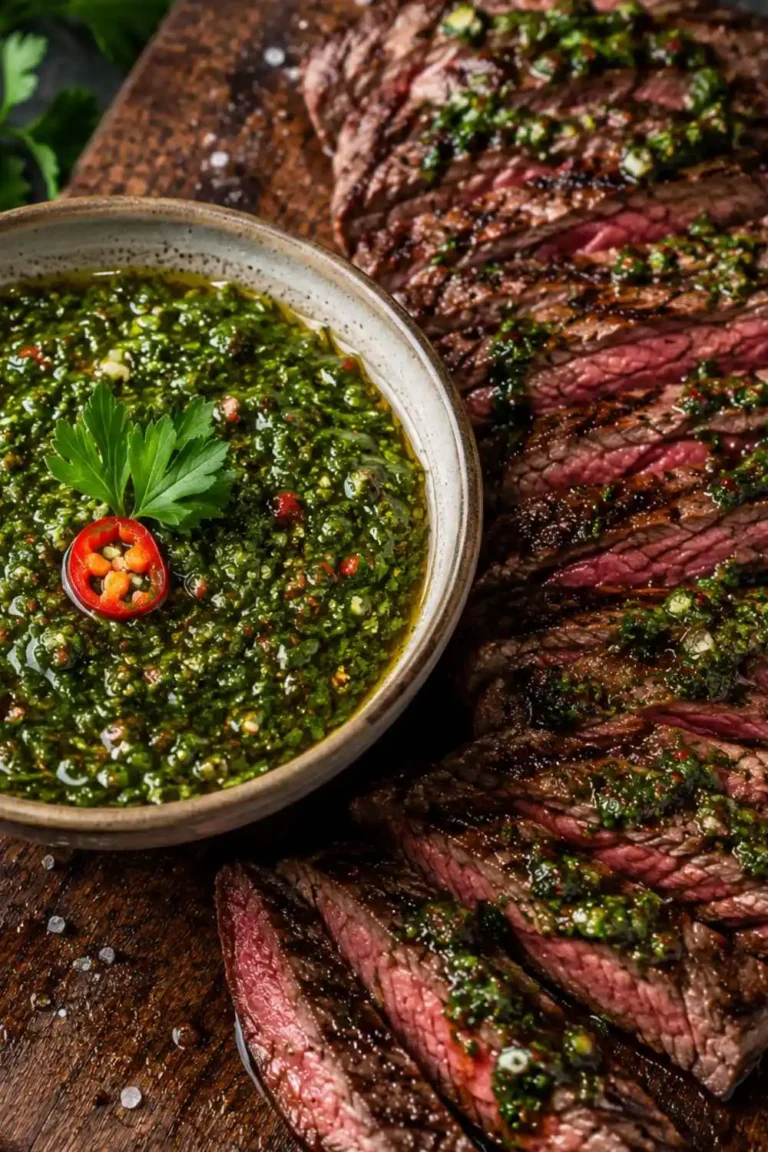
- Chimichurri Sauce Recipe – Bold, Herby & 10 Minutes
- 7 Best Dipping Sauces Recipes (Easy & Homemade!)
- Salmon Mediterranean Bowl with Farro Recipe
- The Best Basil Dressing Recipe for Salads & Bowls
- Enchilada Sauce Recipe
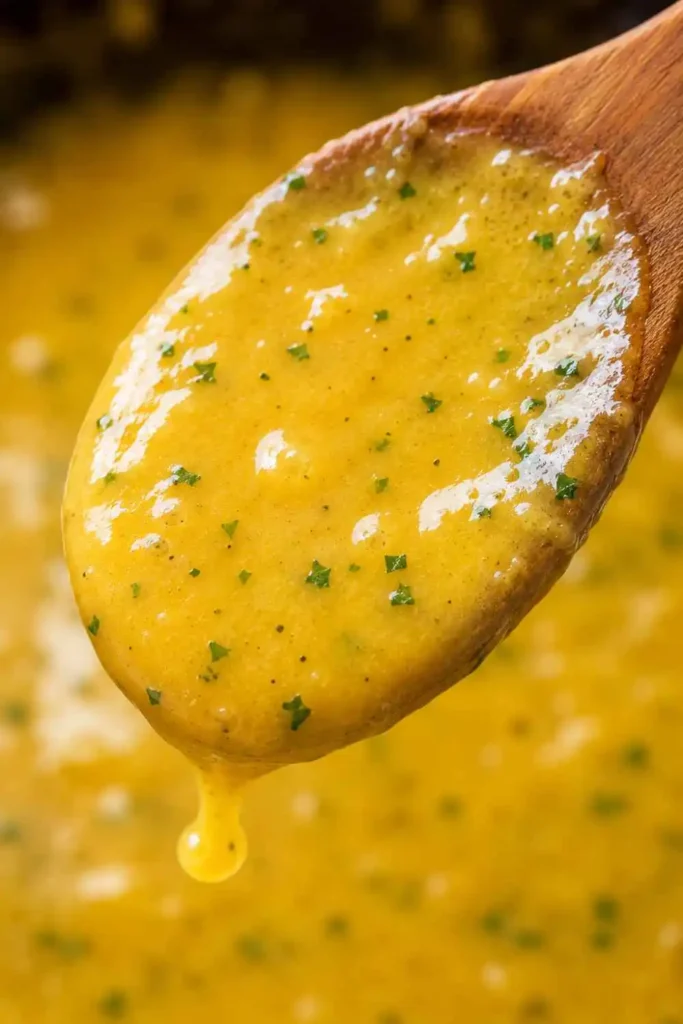
Consistency & Troubleshooting Guide
Sauce looks greasy and broken (split): This almost always happens if the heat was too high or the butter was added too fast. Fix it: take the pan off the heat completely, add 1 teaspoon of cold water and 1 small piece of cold butter, and whisk vigorously. The cold water helps the emulsion reform. If it’s very broken, start with a fresh teaspoon of cold water in a bowl and slowly whisk the broken sauce into it.
Sauce is too thin: Let it reduce for 30 more seconds over very low heat while swirling. Do not boil it or it will break.
Sauce is too thick: Add 1 to 2 teaspoons of warm water or lemon juice and swirl to loosen. Works perfectly.
Sauce tastes too sharp/acidic: Add a pinch of sugar or an extra piece of butter to round out the lemon. A tiny pinch of sugar (less than ¼ teaspoon) makes a significant difference.
Garlic tastes raw or sharp: The garlic wasn’t cooked long enough in Step 2. It should be soft and fragrant before you add the lemon juice.
Why did my garlic turn slightly blue-green? This is a chemical reaction between garlic’s sulfur compounds and the acid in lemon juice. It’s completely harmless, just a visual surprise. It happens most often with freshly minced (not grated) garlic. Use a microplane for grated garlic to avoid this.
How to Use and Pairing Guide
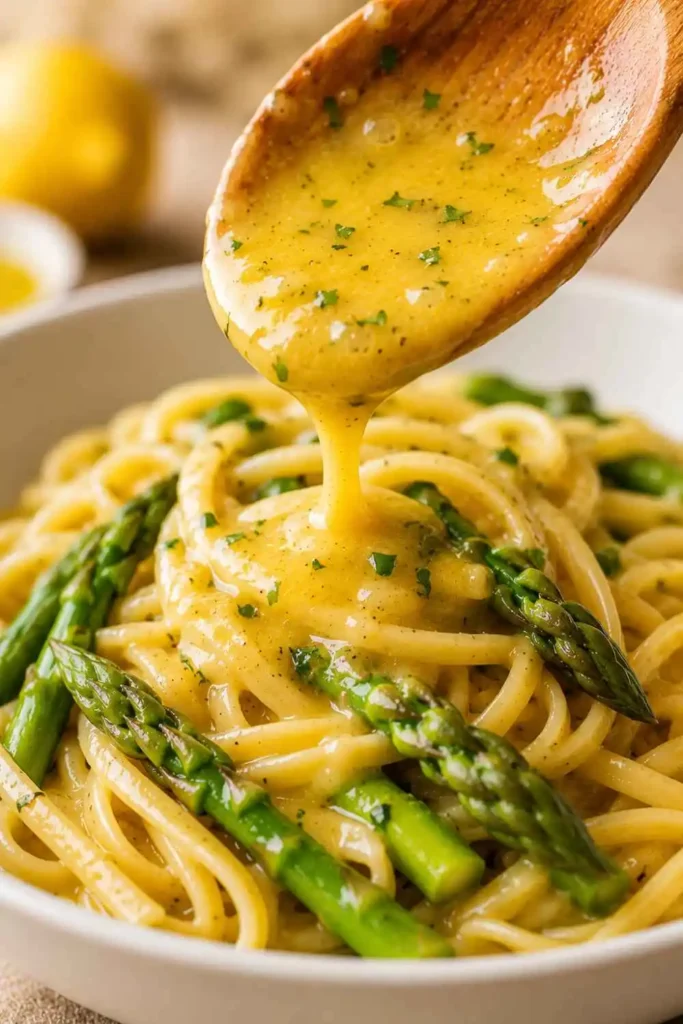
Direct Pairings (The Classics)
With pasta: Toss hot drained pasta directly in the pan with the sauce off the heat. Add a splash of pasta water (2 to 3 tablespoons) to help the sauce coat every strand. Finish with Parmesan and fresh parsley. This works with spaghetti, linguine, or any short pasta.
With fish: This is where lemon butter sauce is truly at home. Spoon it over pan-seared salmon, baked cod, or grilled halibut right before serving. Do not add it during cooking – it should go on as a finishing sauce so it stays glossy and the lemon stays bright. The sauce should be warm, not piping hot, when it hits the fish.
With steamed or roasted vegetables: Drizzle over asparagus, green beans, broccoli, or roasted cauliflower right after they come out of the oven. The heat of the vegetables keeps the sauce fluid. This is honestly the easiest weeknight side dish upgrade.
With chicken: Spoon over grilled chicken breasts or thighs. Add capers and a little Dijon mustard to the sauce for a version that tastes like a proper piccata without the dredging and frying.
Creative Uses
As a bread dipping sauce: Serve in a warm ramekin alongside crusty sourdough or garlic bread. Add a few capers and a pinch of smoked paprika to make it interesting. Absolutely addictive as an appetizer.
Tossed with grains: Stir into cooked farro, couscous, or white rice while still hot. Add roasted cherry tomatoes and a handful of fresh herbs for an easy grain bowl that feels complete. [INTERNAL LINK: Mediterranean Grain Bowl Recipe]
As a finishing sauce for soup: Drizzle 1 to 2 teaspoons over a bowl of creamy potato soup, roasted tomato soup, or white bean soup right before serving. It adds richness and brightness in a way that regular butter or cream just doesn’t.
Serving Temperature
This sauce is always best served hot and right after making. It does not wait well. If you must hold it, keep it in the pan off the heat for up to 10 minutes and give it a quick swirl before serving. For fish, serve the sauce in a small warm pitcher on the side so guests can pour their own.
Garnish Ideas
- Fresh parsley or chives, finely chopped
- A few capers scattered on top
- Lemon zest for extra citrus punch
- A thin slice of lemon on the edge of the plate
- Pinch of smoked paprika for color and warmth
Storage, Shelf Life & Remixing Notes
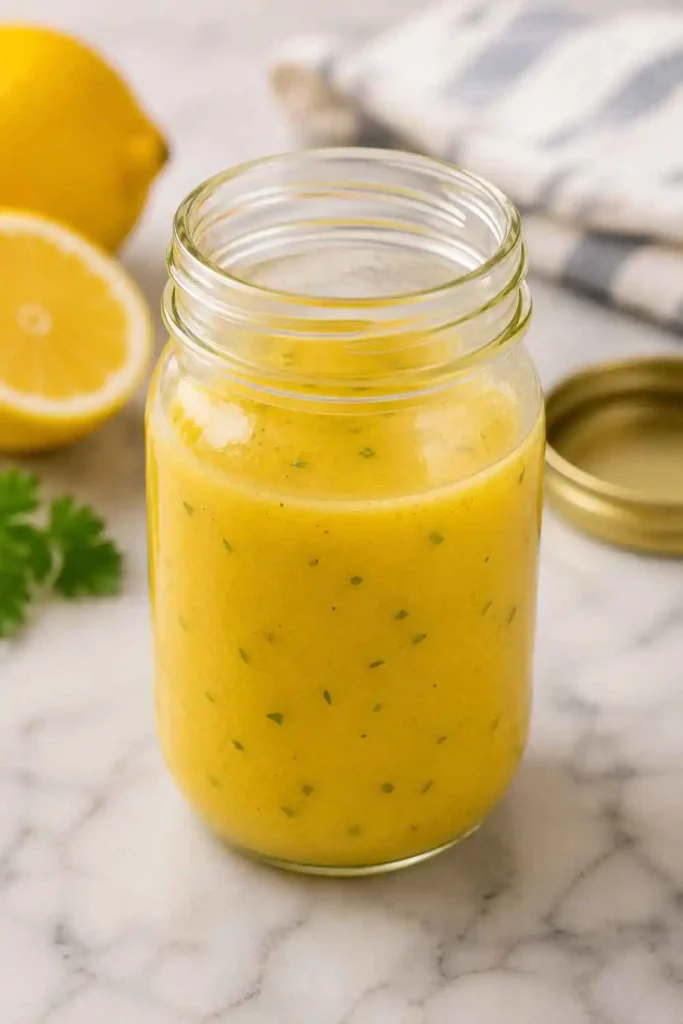
Refrigerator: Store leftover sauce in a sealed glass jar or airtight container in the fridge for up to 3 days. It will solidify completely when cold. This is normal.
Reheating: Warm it gently in a small saucepan over the lowest heat setting, swirling or whisking constantly. Do not microwave it directly or it will break into greasy puddles. If it starts to separate while reheating, take it off the heat and whisk in 1 teaspoon of cold water.
Freezing: Not recommended. The emulsion does not survive freezing and thawing and the sauce will be oily and separated when thawed. Make it fresh – it takes 5 minutes.
Glass jar tip: Pour the sauce into a clean wide-mouth mason jar while it’s still hot. It stores cleanly and reheats well when you set the jar in a bowl of warm water to thaw before moving to the stovetop.
FAQ
Can I make lemon butter sauce ahead of time?
You can make it up to 3 days ahead and store it in the fridge. Reheat gently in a saucepan on the lowest heat, whisking constantly. It will look broken at first but comes back together with gentle heat and stirring. Do not rush it.
Why does my lemon butter sauce keep separating?
The most common reason is too much heat. Butter emulsion breaks above a certain temperature. Always use low to medium-low heat and remove the pan from the heat before adding the final butter pieces. Adding butter too fast also causes separation – one piece at a time, with constant stirring.
Can I use salted butter?
Yes, just skip the added salt and season to taste at the end. The sauce will be slightly different in flavor balance but still delicious.
How do I make a larger batch for a dinner party?
Double or triple the recipe exactly. Use a larger saucepan. The technique stays the same – the key is still adding the butter off the heat, one piece at a time.
Can I add cream to make it thicker?
Yes. Add 1 to 2 tablespoons of heavy cream after the garlic and lemon step, let it reduce by half, then remove from heat and add the butter. This creates a more stable, slightly thicker sauce that holds better for pasta dishes.
What’s the difference between lemon butter sauce and beurre blanc?
Beurre blanc is the classic French technique: shallots and wine are reduced first, then cold butter is whisked in off the heat. Lemon butter sauce is the simplified everyday version using lemon juice instead of wine reduction. Same emulsification principle, faster and pantry-friendly.
Is lemon butter sauce gluten-free?
Yes, naturally. All the ingredients (butter, lemon, garlic, salt) are naturally gluten-free. Just check that any capers or optional add-ins you use are also gluten-free certified if that’s a concern.
Recipe Card

Lemon Butter Sauce Recipe
Course: Sauce, CondimentCuisine: French, AmericanDifficulty: Easy4
servings2
minutes3
minutes105
kcal5
minutesLemon Butter Sauce Rich, glossy, and done in 5 minutes. This easy lemon butter sauce works on fish, pasta, vegetables, and more.
Ingredients
4 tablespoons (½ stick) unsalted butter, cold, cut into 4 equal pieces
2 tablespoons fresh lemon juice (about 1 medium lemon)
2 garlic cloves, finely grated (microplane preferred) or minced
¼ teaspoon fine sea salt, plus more to taste
Freshly ground black pepper, to taste
1 tablespoon fresh flat-leaf parsley, finely chopped (optional)
Pinch red pepper flakes (optional)
Directions
- Cut butter into 4 equal pieces. Set aside.
- In a small saucepan over medium-low heat, melt 1 piece of butter. Once it foams, add the grated garlic and cook, stirring constantly, for 45 to 60 seconds until fragrant but not golden.
- Add the lemon juice and stir to combine. Remove the pan from the heat.
- Add the remaining 3 cold butter pieces one at a time, swirling or whisking vigorously between each addition, until the sauce is glossy and emulsified (about 90 seconds total).
- Season with salt, pepper, and parsley. Taste and adjust.
- Serve immediately over fish, pasta, or vegetables.
Notes
- Vegan: Use Miyoko’s vegan butter. Omit added salt as vegan butter is pre-salted; season to taste.
Dairy-free: Same as vegan substitution above.
Richer version: Add 1 tablespoon heavy cream after step 3, reduce by half, then proceed.
If sauce splits: Remove from heat, add 1 teaspoon cold water and whisk vigorously. Add a fresh piece of cold butter to help re-emulsify.
Storage: Refrigerate in a glass jar up to 3 days. Reheat gently on lowest heat, whisking constantly. Do not freeze. - Approximate Nutrition (per serving)
Calories: 104
Fat: 11.5g (Saturated: 7.3g)
Carbohydrates: 0.8g
Protein: 0.2g
Sodium: 148mg
Warm Conclusion
This lemon butter sauce has become one of those recipes I make on autopilot now. Pasta night, sheet pan fish on a Tuesday, a simple roasted vegetable that needs to feel like more – this sauce fixes all of it in under five minutes. Keep a lemon in your kitchen and you’re always 5 minutes away from a sauce that makes people ask what you did differently.
Save this recipe and try it this week. Once you see how easy it is to get that glossy, restaurant-style finish at home, you’ll understand why it’s on repeat in our kitchen. Drop a comment below and tell me what you drizzled it on first.
Try it next with our Salmon Mediterranean Bowl]